

On any job site, whether it's a bustling construction project or a fast-paced manufacturing plant, hand injuries aren't just a possibility—they're a constant threat that can bring work to a grinding halt and cause serious harm.Cut-resistant gloves are more than just another piece of PPE. They're a direct investment in your team's safety and your company's bottom line. Getting hand protection right is a fundamental part of any safety program that actually works.
Why Cut-Resistant Gloves Are a Non-Negotiable for Workplace Safety
If your safety program is a building, then proper hand protection is part of the foundation. Skimp on it, and the whole structure becomes unstable. Ignoring the need for the right gloves undermines all your other safety efforts and puts both your people and your business in a vulnerable position.
Every single day, your crew handles sharp tools, materials with rough or jagged edges, and powerful machinery. It only takes a split second—a moment of distraction or an equipment failure—for a severe cut or laceration to happen. These incidents are more than just numbers on a report; they translate into lost workdays, rising insurance premiums, and a team that’s on edge.
Equipping your team with the correct cut-resistant gloves is one of the most straightforward and impactful ways to prevent hand injuries. It sends a clear message that you take their well-being seriously, which builds trust and ultimately leads to a more focused and productive workforce.
The True Cost of a Hand Injury
The financial fallout from a single cut goes way beyond the initial trip to the clinic. You have to look at the ripple effect it has on your entire operation:
- Downtime and Lost Productivity: The injured worker is out, and you might have to pause operations to figure out what went wrong.
- Administrative Headaches: Suddenly, you're buried in paperwork for workers' compensation claims and incident reports, pulling you away from other critical tasks.
- Rising Insurance Premiums: A track record of injuries can lead to a nasty surprise when it's time to renew your insurance policy.
- Team Morale: An injury doesn't just affect one person. It can create an atmosphere of anxiety and hesitation that impacts the whole crew's confidence and performance.
Investing in high-quality personal protective equipment isn't a cost; it's a strategy. It moves you from reacting to disasters to actively preventing them, creating a culture where safety is just how things are done.
A Growing Market Driven by Real-World Needs
The demand for reliable hand protection isn't slowing down, especially in high-risk industries. North America makes up over 40% of the global cut-resistant gloves market, a market expected to hit around USD 729.80 million in 2025. That growth is coming straight from the automotive and construction sectors, where cuts and lacerations are a primary, everyday hazard.
Of course, gloves are just one piece of the puzzle. Forward-thinking companies are also exploring technologies like augmented reality safety programs to boost hazard awareness before an incident can even happen. The best safety approach is a layered one. This guide will give you the practical knowledge needed to build a smarter hand protection program, starting with our complete lineup of cut-resistant gloves for Canadian workplaces.
Decoding ANSI and EN Safety Standards
Trying to make sense of safety standards for cut-resistant gloves can feel like you’re reading a technical manual for a spaceship. But it doesn't have to be that complicated.
Think of the ratings on a glove, like ANSI/ISEA 105 or EN 388, as a nutritional label. They give you clear, standardized facts about the glove's performance so you can make a smart, informed choice for your team. These standards create a common language for everyone involved—manufacturers, distributors, and safety managers—ensuring that when a glove says it offers a certain level of protection, that claim is backed by solid, repeatable testing. That’s the kind of accountability that keeps people safe.
The North American Standard: ANSI/ISEA 105
Here in Canada, the main standard you’ll be working with is ANSI/ISEA 105. This system is refreshingly straightforward, using a simple A1 through A9 scale to grade cut resistance. A glove with an A1 rating is good for minor scrapes and nuisance cuts, while an A9 glove is built to handle the most extreme cut hazards out there.
This entire rating system hinges on one incredibly reliable test: the ASTM F2992-15. It has become the gold standard because it delivers consistent, accurate results, especially for gloves made with today's advanced, high-performance fibres that could easily fool older testing methods.
A well-designed safety program, built on understanding these standards, is about more than just checking a box. It’s a direct investment in your team’s productivity and morale.
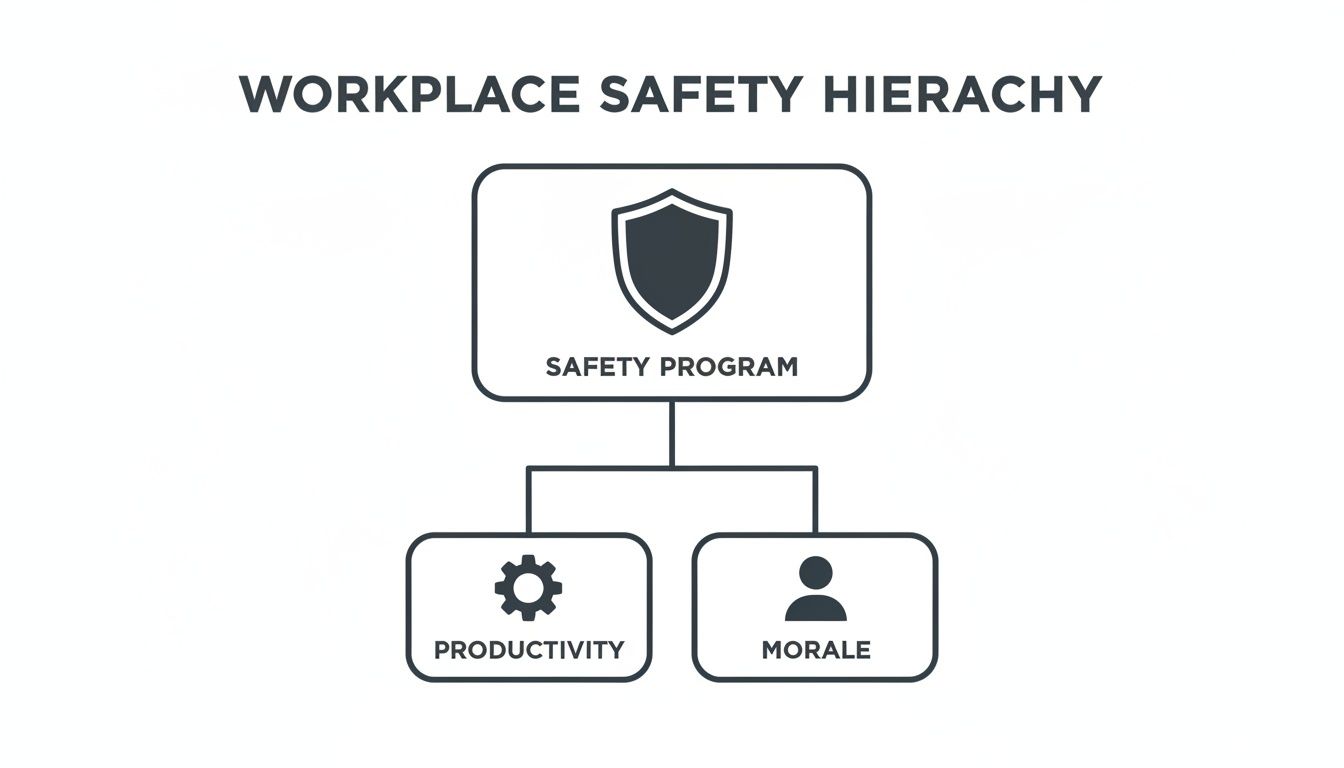
When your crew feels protected and confident in their gear, they can focus on the job at hand, leading to a safer, more efficient, and more positive work environment for everyone.
How the Modern Cut Test Works
So, how do they actually come up with that A1-A9 rating? The magic happens inside a machine called a Tomodynamometer, or TDM-100. It’s a precise piece of equipment, but the process is pretty easy to understand.
- A small piece of the glove material is secured in the machine.
- A straight-edge blade is drawn across the material under a specific, measured weight.
- Here’s the key part: this is repeated with a brand-new blade for every single cut. After five passes, the weight is increased.
- The machine records the exact force—measured in grams—needed for the blade to slice completely through the material over a distance of 20mm.
That final number determines the A1-A9 rating. For example, if it takes between 2,200 and 2,999 grams of force to make the cut, the glove earns an A5 rating. Using a fresh blade every time is what makes this test so trustworthy; it prevents the blade from dulling on tough fibres and giving a false sense of security.
For high-hazard jobs, having a dependable rating like the one on these para-aramid A5 cut-resistant gloves isn't just a good idea—it's absolutely critical.
To make it even easier, here’s a quick-glance table to help you match the ANSI cut level to your specific job site needs.
ANSI/ISEA 105 Cut Level Guide
| ANSI Cut Level | Cut Resistance (Grams) | Typical Applications |
|---|---|---|
| A1 | 200 - 499g | Nuisance cuts, material handling, general-purpose assembly |
| A2 | 500 - 999g | Small parts assembly, warehousing, packaging, light construction |
| A3 | 1,000 - 1,499g | General maintenance, pulp & paper handling, light-duty glass handling |
| A4 | 1,500 - 2,199g | Metal fabrication, appliance manufacturing, bottle & glass handling |
| A5 | 2,200 - 2,999g | Heavy metal stamping, food processing (meat & poultry), pulp processing |
| A6 | 3,000 - 3,999g | Heavy-duty metal fabrication, glass & window manufacturing, automotive assembly |
| A7 | 4,000 - 4,999g | Heavy material handling, sharp metal recycling, high-risk industrial tasks |
| A8 | 5,000 - 5,999g | Blade handling, heavy-duty demolition, recycling plant sorting |
| A9 | 6,000g + | Extreme cut hazards, meat butchering, plate glass handling, heavy metal stamping |
This chart is your cheat sheet for quickly identifying the right level of protection, moving from low-risk tasks at A1 all the way up to the most demanding and dangerous jobs at A9.
Understanding the European EN 388 Standard
While ANSI/ISEA 105 is king in North America, you'll still see the EN 388 standard, especially on gloves from European brands. It’s worth knowing the difference because the standard has changed over time, which can sometimes lead to confusion.
Originally, EN 388 relied on something called the "Coup Test," which used a spinning circular blade. This test was fine for basic materials but failed spectacularly on modern, high-performance fibres—the blade would dull almost instantly, giving wildly inaccurate results.
To fix this, the EN 388 standard was updated to include the very same TDM-100 test that ANSI uses. Now, you’ll see results marked with a letter grade from A to F. If you see an 'X' where the Coup Test result should be, it means the glove was tested with the far more reliable TDM machine.
For any Canadian workplace, the ANSI/ISEA 105 A1-A9 rating is the clearest and most trusted benchmark. When you see that 'A' rating, you know exactly what kind of defence your team is getting, backed by the industry’s most reliable test.
Understanding Glove Materials: Liners and Coatings
The real magic behind a top-tier, cut-resistant glove isn't just one thing—it's the "recipe." Think of it like a chef combining just the right ingredients. Glove manufacturers are constantly blending high-performance fibres and specialized coatings to nail that perfect balance of protection, dexterity, and all-day comfort. Getting a handle on these core components is the first step to choosing the right glove for your crew.
A glove's liner is its backbone. It's the knitted shell that does the heavy lifting for cut resistance. But here's the thing: the best gloves almost never use a single material. Instead, they’re built with engineered yarns that weave together the strengths of multiple fibres to maximize toughness and wearability.
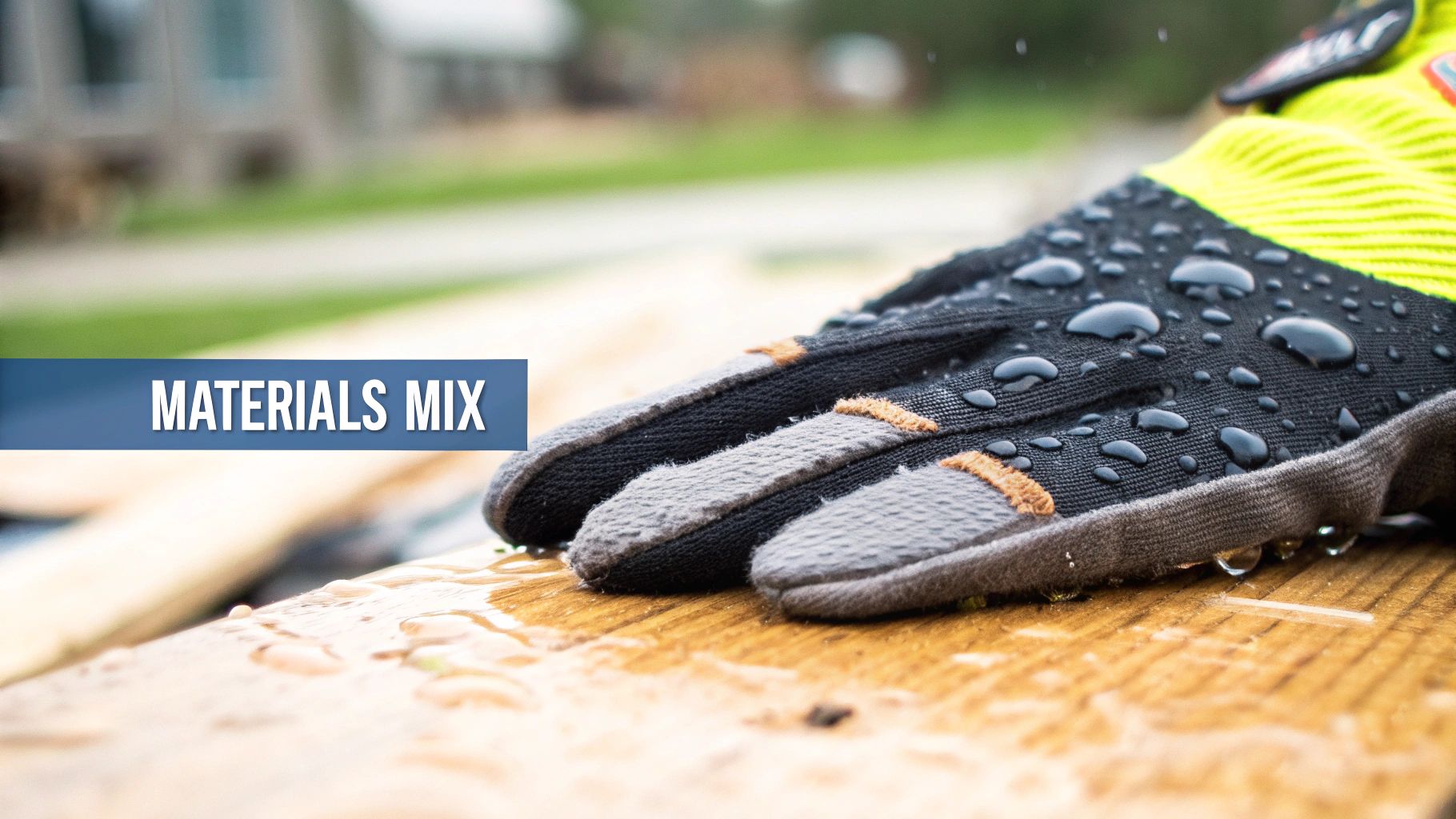
This blending process is where all the innovation happens. It’s how we get gloves that can hit the highest ANSI A9 cut levels while still feeling light and flexible enough for detailed work.
The Core Fibres of Cut Protection
At the heart of any cut-resistant glove is its liner, and that liner is usually built from a handful of key, high-performance materials. Each one brings something different to the table, and they’re often combined to create the ideal glove for a specific job.
- High-Performance Polyethylene (HPPE): This is the workhorse of modern safety gloves. HPPE is incredibly strong and light, offering fantastic cut and abrasion resistance without making your hands feel trapped. It even has a natural cooling effect, which is a game-changer for anyone wearing gloves all day.
- Aramid Fibres (like Kevlar®): Famous for their incredible strength-to-weight ratio, aramid fibres are also naturally flame-resistant. This makes them the go-to choice for jobs involving heat or sparks, like welding or metal fabrication. For extra arm protection in these settings, pairing gloves with tough aramid-resistant sleeves is a smart move.
- Steel and Fibreglass Filaments: When you absolutely need maximum cut resistance, manufacturers will weave tiny micro-filaments of steel or fibreglass right into the yarn. These ultra-hard materials act like a shield, stopping sharp edges from getting through. They’re essential for reaching those higher ANSI cut levels (A5 and above).
It's worth remembering that the glove industry is always changing. New regulations, like PFAS bans, and shifting tariffs on materials like aramid and HPPE are shaking things up. These changes can hike material costs by as much as 25%, pushing manufacturers to get creative with new, compliant fibres. You can read more about these market trends to see how they affect the products you buy.
The Crucial Role of Glove Coatings
If the liner is the main course, the coating is the sauce that brings it all together. This layer is applied to the glove's palm to add specific performance features that the liner can't provide on its own. While a coating doesn't add much cut resistance, it dramatically boosts a glove's grip, durability, and resistance to liquids.
The right coating can take a glove from a simple protective layer to a specialized, high-performance tool built for a specific environment.
Choosing the Right Finish
It's not just about the coating material—the finish matters, too. The texture of the coating completely changes how a glove performs, especially when it comes to grip.
| Coating Type | Primary Benefit | Ideal Use Case |
|---|---|---|
| Nitrile | Excellent resistance to oils, fuels, and some chemicals | Automotive, machine shops, general maintenance |
| Polyurethane | High tactile sensitivity and dexterity | Small parts assembly, electronics, detailed inspection |
| Latex | Superior grip in dry and wet conditions | Construction, glass handling, general material handling |
| Sandy Nitrile | Channels away liquids for grip in oily environments | Oil and gas, heavy manufacturing, metal fabrication |
| Foam Nitrile | Absorbs liquids to enhance grip on wet surfaces | Plumbing, wet assembly, outdoor work in damp conditions |
For instance, a sandy nitrile finish feels slightly gritty. That texture creates tiny channels that push oil and other liquids away, giving you a secure grip on slippery parts. On the other hand, a foam nitrile coating works more like a sponge, absorbing moisture to keep your grip solid in wet (but not super oily) conditions. And a smooth polyurethane coating offers a tacky feel that's perfect for handling small, dry components with precision.
Ultimately, the best cut-resistant gloves are the ones where the liner and coating work in perfect harmony. By understanding how they function together, you can see past the marketing buzz and pick a glove based on its true construction—ensuring it’s perfectly matched to the real-world hazards your team faces every day.
How to Select the Right Glove for Your Industry
Knowing the standards and materials is one thing, but true safety comes from applying that knowledge to the real world. A glove that’s perfect on one job site can be a serious liability on another. The real key is moving from the textbook definitions to practical, boots-on-the-ground decision-making.
This section breaks down the unique hazards your teams face in Canada’s most demanding industries. By looking at a 'day in the life' for each sector, we can pinpoint the exact features that make a glove an indispensable safety tool, not just another piece of PPE.

This approach turns abstract data into an actionable buyer's guide, helping you match the right cut-resistant gloves to the specific dangers your people face every single day.
Oil and Gas Operations
Picture a worker in Alberta's oil fields. Their job is a mix of intense, unpredictable hazards. One moment, they’re wrestling with rough-edged pipes and valves; the next, they're near heavy machinery where a dropped tool could cause a serious impact injury.
The environment itself is a massive challenge. Surfaces are slick with oil, drilling mud, or grease, making a secure grip an absolute must. Throw in the extreme Canadian weather, and you realize thermal protection is just as vital as cut resistance for a good chunk of the year.
For these complex jobs, a basic, single-feature glove simply won't do the job.
- Recommended ANSI Cut Level: A good starting point is A5 to A7. This range offers serious protection against the sharp metal and abrasive surfaces common in drilling, extraction, and refinery work.
- Essential Features: Look for gloves with thermoplastic rubber (TPR) on the back of the hand and fingers for impact protection. A sandy nitrile palm coating is critical for channelling away oils to maintain a solid grip, and an insulated liner is non-negotiable for cold-weather operations.
Construction and Skilled Trades
On a construction site, the hazards are always changing. A framer deals with splintered wood and nail guns, an electrician strips wires, and a drywaller handles sharp-edged metal studs. The common thread here is the constant need for both protection and dexterity.
A worker can’t afford to lose their sense of touch inside a bulky, awkward glove. They need a perfect balance—tough enough to guard against slips from a utility knife, but flexible enough to handle small screws and fasteners with precision.
A glove that fits poorly or kills dexterity is a safety hazard in itself. Workers are far more likely to take it off for "just a second," and that's exactly when most injuries happen. The right glove should feel like a second skin, not a clumsy obstacle.
For construction crews, here's what matters:
- Recommended ANSI Cut Level: A3 to A4 usually hits the sweet spot for general construction, providing solid protection without sacrificing the tactile feel needed for detailed tasks.
- Essential Features: A polyurethane or foam nitrile coating gives an excellent grip on both dry and damp surfaces. The liner itself needs to be breathable to help manage sweat during a long, hard shift.
Utilities and Powerline Work
For the technicians keeping Canada's electrical grid running, the risks are layered. Cut protection is important when handling components or climbing structures, but it often has to take a backseat to even more critical needs like arc flash and electrical shock protection.
Think about a lineman repairing a power line after a storm. They might be dealing with frayed cables, but their number one concern is the electrical current. Their hand protection has to be multi-functional, defending against several hazards at once, without fail.
- Recommended ANSI Cut Level: A2 to A4 is often sufficient here, as the main cut risks come from handling wiring and smaller components, not heavy, sharp materials.
- Essential Features: The game-changing feature is a dielectric rating for shock protection. This is usually a two-part system: a rubber insulating glove covered by a tough leather protector glove. The outer leather layer provides the necessary cut and puncture resistance while shielding the critical insulating layer from damage.
Food Processing and Production
The food processing industry is a huge part of the Canadian economy, and its need for specialized cut-resistant gloves is massive. A worker in a meat packing plant or a large commercial kitchen uses razor-sharp knives and blades for hours, often on slick, wet surfaces where the risk of a severe cut is incredibly high.
The industry's strict safety standards, driven by the massive cost of workplace injuries, have resulted in a significant 18% year-over-year increase in glove procurement. This number really drives home how essential it is to choose PPE designed for these high-stakes jobs. You can dive deeper into why hand protection is so vital by exploring market insights on cut-resistant food gloves.
- Recommended ANSI Cut Level: A7 to A9 is the benchmark. When you're working with industrial blades all day, maximum protection is the only sane choice.
- Essential Features: Gloves must be food-safe and easy to clean and sanitize. Materials like stainless steel mesh or high-performance HPPE blends are common. A snug fit is vital to ensure the glove doesn't catch on a blade, and high-visibility colours are often used to make hands stand out.
Extending the Life of Your Safety Gloves
Handing out a box of high-quality **cut-resistant gloves** is a fantastic start, but a safety manager’s job doesn't stop there. If you want to get the most out of your PPE investment, you need a solid plan for glove care, inspection, and replacement. Good maintenance practices keep your team protected and help you build a safety program that’s both sustainable and cost-effective.
It all begins with getting the right fit. A glove that’s too big can easily snag on machinery, while one that’s too tight restricts movement and leads to hand fatigue. Either way, you’ve got a serious safety hazard on your hands—and a worker who’s more likely to take their gloves off, which is exactly when most injuries happen. A proper fit improves dexterity and makes sure all the glove's protective features are where they need to be.
Proper Care and Washing Routines
Just like any other piece of gear, safety gloves work best when they're clean. Over time, built-up dirt and grime can actually break down the high-performance fibres, weakening their protective qualities. Setting up a simple, consistent washing routine is a must.
For most synthetic fibre gloves, a few general steps will do the trick:
- Use a Mild Detergent: Harsh chemicals can wreck the fibres that keep your team safe. Stick to a gentle soap.
- Wash in Cool or Cold Water: Hot water can cause materials like HPPE and Dyneema to shrink or lose their shape.
- Tumble Dry on Low Heat: Just like with washing, high heat from a dryer can damage the fibres and any special coatings.
Always double-check the manufacturer’s specific care instructions, since some materials or coatings might have unique needs. Regular cleaning doesn't just make the gloves last longer; it’s also a big plus for worker hygiene.
Proper maintenance isn't just about saving money; it's about reliability. A well-cared-for glove is one you can trust to perform as expected when a worker is handling a sharp edge or a dangerous piece of equipment.
Knowing When to Replace Your Gloves
Let's be realistic: no glove lasts forever. That’s why regular, thorough inspections are non-negotiable for spotting when a pair has reached the end of the road. Train your crew to give their gloves a quick once-over for signs of wear and tear before every single shift.
Here are the key red flags that mean a glove needs to be retired:
- Fraying or Snags: Any visible damage to the knitted liner is a sign its structural integrity is compromised.
- Delamination: If the coating is peeling or separating from the liner, you lose grip and expose the inner fibres to damage.
- Visible Holes or Tears: Even a small breach means the protective barrier is gone. It's a direct path to injury.
- Stiffening or Discolouration: This often points to chemical damage that has weakened the glove’s core materials.
The safety glove market is always moving forward, with a big push toward more sustainable and functional designs. The use of eco-friendly, biodegradable materials is growing at an 11.27% CAGR, largely driven by concerns over PPE waste. These advancements are changing how we think about a glove’s lifecycle and disposal. You can discover more insights about these safety glove market trends to stay ahead of the curve.
And for those unique challenges, like working through a frigid Canadian winter, specialized options like the Guardmax Winter-Lined Cut-Resistant Glove blend serious durability with the thermal protection your team needs.
Streamlining Your PPE Management Program
Let's be honest: managing personal protective equipment can feel like a full-time job on its own. If you're a busy safety manager, you know the drill. You're constantly juggling inconsistent product orders, dealing with surprise inventory shortages, and trying to make sure every single worker has the right gear for the task at hand. It's a never-ending cycle that pulls your focus away from what really matters—building a proactive and effective safety culture on the ground.
There’s a much smarter, more efficient way to handle this: a managed PPE program. This kind of system takes all the guesswork and logistical headaches out of procurement. It ensures your entire organization has standardized, compliant protection, without fail.
Instead of scrambling to place dozens of small orders, a managed program centralizes your entire supply chain. It’s designed to solve the most common pain points by giving you consistent access to expert-approved equipment, from cut-resistant gloves to specialized footwear. The bottom line? No one is ever left unprotected.
The Benefits of a Centralized System
Partnering with a specialist supplier offers a lot more than just convenience. It’s a genuine strategic advantage that frees up your time and resources while raising your safety standards across the board. A well-run program brings several key benefits to the table:
- Expert Guidance: You get direct access to product specialists who live and breathe this stuff. They understand the unique hazards of your industry and can recommend the absolute best PPE for each specific role.
- Guaranteed Compliance: A managed program ensures that every piece of equipment, including your cut-resistant gloves, meets or exceeds all necessary Canadian safety standards. No more second-guessing.
- Simplified Administration: Imagine getting rid of all that endless paperwork. Consolidated billing and reporting give you a clear, top-level view of your PPE spending and usage, making life much easier.
- Standardized Protection: Every worker, whether they're on a remote crew or at the main site, receives the exact same high-quality, approved gear. This eliminates dangerous inconsistencies in protection.
This shift isn't just a small trend; it's where the industry is heading. The U.S. safety gloves market, for example, is expected to climb to USD 8,928.57 million by 2032, a surge driven by high-risk sectors that are demanding more reliable and organized PPE solutions. A dependable supplier is no longer a luxury—it's a necessity.
Beyond Gloves: A Complete Safety Partnership
A truly effective managed program doesn’t just stop at gloves; it looks at your entire safety ecosystem. At Refinery Work Wear Canada, we offer a comprehensive managed FR uniform and work boot program that’s built to scale, whether you have a small team or a massive enterprise fleet. It’s all about creating a seamless and unified safety standard for everyone.
A managed program also reinforces your training efforts. A crucial part of PPE management involves implementing comprehensive health and safety training programs to ensure all employees know their role. When the gear used in training is the exact same gear workers will use in the field, you're reinforcing best practices and building muscle memory.
Ultimately, streamlining your PPE management is about reclaiming your time to focus on what truly matters. It allows you to shift from being a reactive equipment buyer to a proactive safety leader—one who fosters a culture where every worker feels confident, protected, and valued.
Got Questions About Cut-Resistant Gloves? We’ve Got Answers.
Even after you get the hang of the standards and materials, real-world questions always pop up. Let's tackle some of the most common ones we hear from safety managers and workers out in the field.
Are Higher Cut-Level Gloves Always the Best Choice?
Not always. In fact, picking a glove with a much higher cut level than the job requires can actually backfire. Think about it: an A9 glove is built like a tank, but it's also thicker and stiffer than, say, an A4.
For a worker doing a low-risk job, that extra bulk can cause serious hand fatigue. It might even tempt them to take the gloves off entirely for tasks that need a bit of finesse. The right glove is always the one that matches the actual hazards of the job—a smart balance of protection, comfort, and dexterity.
Can You Throw Cut-Resistant Gloves in the Wash?
Absolutely. Most modern cut-resistant gloves made from high-performance synthetic fibres can—and should—be washed regularly. Keeping them clean is key, as caked-on dirt and grime can actually break down and weaken the protective fibres over time.
Just be sure to follow the manufacturer’s specific care instructions. Usually, this involves a simple wash with mild detergent in cool water, followed by a tumble dry on low heat to prevent any shrinking or damage.
One Quick Clarification: People often confuse cut resistance with puncture resistance, but they are not the same thing. Cut resistance is all about stopping a slice from a sharp edge, like a blade. Puncture resistance protects you from a stab, like from a needle or a nail. A glove might be fantastic at one and terrible at the other.
How Do I Know When It’s Time to Replace a Pair of Gloves?
The second a glove shows any real sign of wear and tear, it’s done. There’s no grey area here. A damaged glove is a useless glove, and it creates a false sense of security that can be dangerous.
Train your crew to do a quick visual check before they start each shift. They should be looking for these dead giveaways:
- Any visible holes, tears, or snags in the liner material.
- The coating is starting to peel or flake off.
- Fibres are fraying or the seams are coming apart.
If you see any of these, that glove needs to be taken out of service immediately.
At Refinery Work Wear Canada, our job is to provide the expert guidance and top-tier safety supplies you need to build a hand protection program your team can count on. Explore our full range of safety gear today.