

Picking out the right work boot can feel like a huge task, but honestly, it’s one of the most critical calls you'll make for your daily safety and comfort on the job. Think of this guide as your personal roadmap through the world of Timberland PRO work boots, a brand that has built its name on pure toughness and smart innovation. We're going to break it all down, from the must-have safety tech to deciphering those CSA certifications for Canadian job sites.
Why Timberland PRO Work Boots Are a Job Site Staple
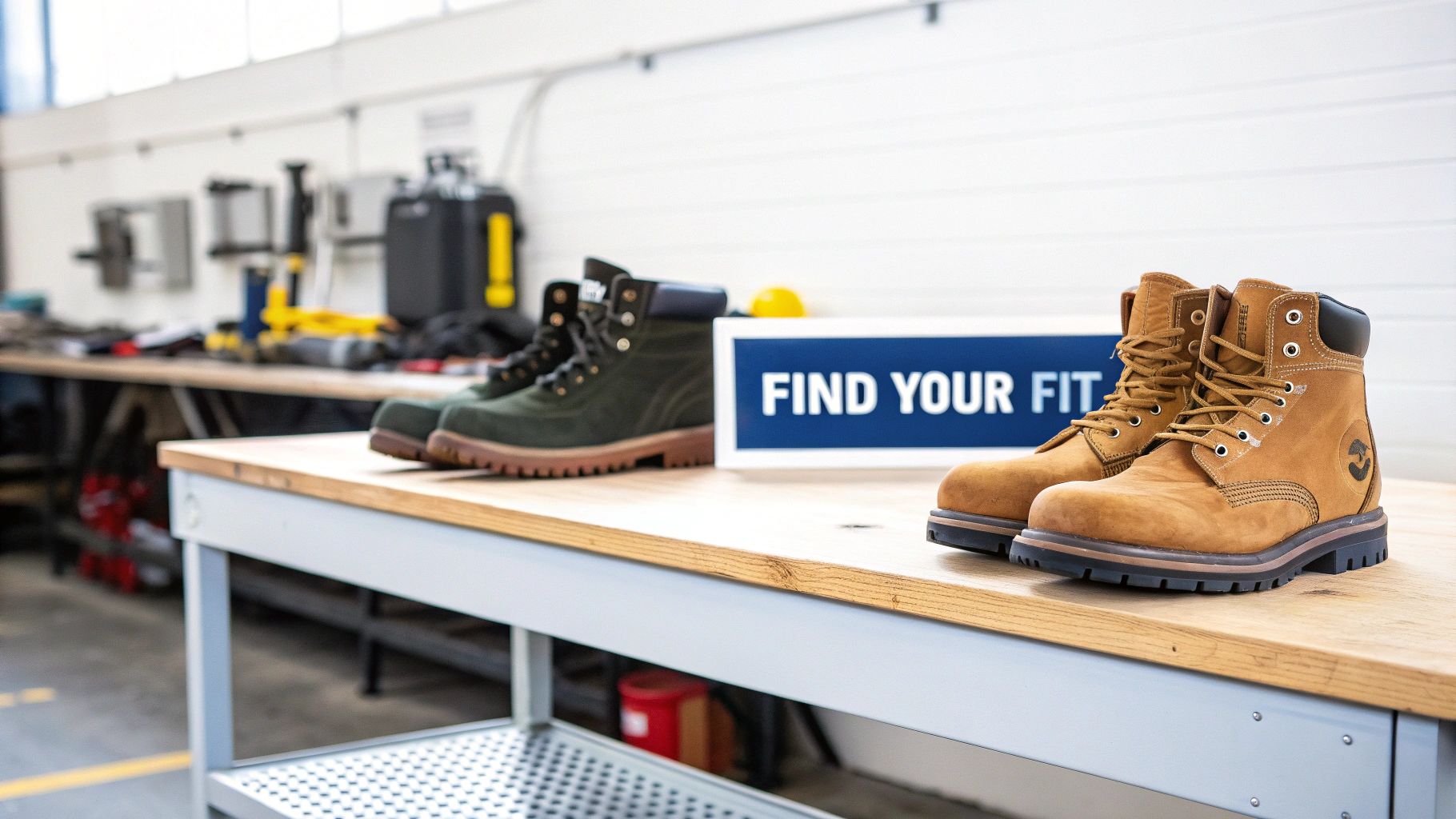
Consider this your one-on-one consultation. We’re here to help you match the perfect boot to your trade, the Canadian climate you work in, and what you personally need to get through the day. By the time you're done reading, you’ll be able to confidently invest in a pair of boots that don’t just protect you but work just as hard as you do.
A Legacy Built for Professionals
You’ve seen the classic Timberland yellow boot everywhere, from fashion runways to hiking trails. But the Timberland PRO line? That’s a different beast altogether. It was created specifically for professionals who work in some of the toughest environments out there. This isn’t about looks; it's about integrating serious technology to solve the real-world problems tradespeople face every single day.
Launched back in 1999, Timberland PRO quickly became a force in the work boot industry by zeroing in on what workers really need. One of their game-changing features is the Anti-Fatigue Technology. It’s a system of shock-absorbing cones built right into the outsole that returns energy to your feet, drastically cutting down on fatigue after long hours on concrete or steel. This dedication to performance is exactly why the brand has earned such a solid reputation.
More Than Just a Boot—It's a Commitment to Safety
Let's be clear: your choice of footwear is a core part of your personal protective equipment (PPE). It’s not just about feeling good at the end of the day; it's about preventing a trip to the hospital. Your boots are a critical piece of the puzzle, and selecting the right Timberland PROs is a huge step toward following effective workplace safety procedures.
Here’s what really makes these boots stand out from the crowd:
- Purpose-Built Design: Every series is engineered with a specific job in mind, whether you're framing a house, pulling wire, or running a warehouse.
- Certified Protection: These boots are put through the wringer to meet or blow past safety standards like CSA and ASTM. That’s your peace of mind on any regulated job site.
- Advanced Comfort: It’s way more than just a cushioned insole. We’re talking about true ergonomic support designed to reduce strain and keep you going.
- Uncompromising Durability: They’re built with top-shelf materials and reinforced where it counts, ready to take a beating day in and day out.
Now that you know what makes this brand a top pick for pros, you’re ready to dive into the entire collection of Timberland PRO work boots and find your perfect pair.
Understanding What Makes Timberland PRO Boots Tick
So, what really sets a pair of Timberland PRO work boots apart from the rest? It’s all about the dedicated engineering and specific technologies packed into every single sole and seam. These aren’t just bullet points on a box; they're real-world solutions designed to solve the problems you face on demanding job sites across Canada.
Think of it like the difference between a standard street car and a purpose-built race car. Sure, both have an engine and wheels, but one is fine-tuned down to the last bolt for peak performance under extreme stress. Timberland PRO takes that exact same mindset to their footwear, making sure every element serves a specific purpose for your safety and all-day comfort.
The Foundation of Comfort: Anti-Fatigue Technology
Spending long hours on unforgiving concrete or steel grating takes a serious toll—not just on your feet, but on your legs and back, too. This is where Timberland PRO’s signature Anti-Fatigue Technology comes in. It’s not just some cushy insole; it's a sophisticated suspension system designed for your body.
Picture a series of small, inverted cones built right into the midsole of the boot. When you step down, these cones collapse to absorb the shock that would normally jolt up your legs. Then, as you lift your foot, they rebound, returning that energy back to you. This constant cycle of shock absorption and energy return drastically reduces strain, helping you feel less worn out at the end of a long shift. For anyone who spends their day on their feet, it’s an absolute game-changer.
Safety Toes: Steel vs. Composite
The safety toe is your first line of defence against impact and compression injuries, making it a non-negotiable feature for most trades. Timberland PRO offers two main types of protective toe caps, and each has its own advantages depending on where you work and what you do.
-
Steel Toes: This is the traditional choice for maximum, heavy-duty protection. Steel toes offer incredible strength and have been the gold standard in the industry for decades, providing the highest level of resistance against falling objects and crushing forces.
-
Composite Toes: Made from non-metallic materials like carbon fibre, fibreglass, or Kevlar, composite toes give you certified protection without the extra weight of steel. This makes them a fantastic choice for anyone who needs to stay quick and agile on their feet.
So, which one is right for you? It really comes down to your specific job site and its conditions.
Comparing Timberland PRO Safety Toe Materials
This quick reference guide can help you decide between Steel Toe and Composite Toe options based on your workplace needs and environment.
| Feature | Steel Toe | Composite Toe |
|---|---|---|
| Material | High-grade steel | Carbon fibre, fibreglass, Kevlar |
| Weight | Heavier | Lighter, reduces foot fatigue |
| Temperature Conduction | Conducts cold, can be less comfortable in winter | Non-conductive, offers better insulation |
| Security Checkpoints | Will set off metal detectors | Will not set off metal detectors |
| Protection Level | Excellent impact and compression resistance, meets or exceeds standards | Meets or exceeds the same safety standards |
| Best For | Construction, heavy manufacturing, demolition | Electricians, airport/secure site workers, jobs requiring lots of walking |
Ultimately, both options offer top-tier protection that meets CSA and ASTM standards. The best choice is the one that fits the unique demands of your workday.
Key Insight: Composite toes are a superior choice for working in extreme cold. Unlike steel, they don't conduct temperature, which helps keep your feet warmer during those harsh Canadian winters. They also won't set off metal detectors, a huge plus for workers in secure facilities.
Shielding You from the Elements
Your work doesn’t stop when the weather turns, and your boots shouldn't either. Timberland PRO integrates several key technologies to keep your feet dry, warm, and comfortable, no matter what the forecast throws at you.
TimberDry™ Waterproof Protection
Plenty of boots claim to be waterproof, but Timberland PRO’s TimberDry™ membrane offers a truly reliable barrier against the elements. This waterproof lining is bonded directly to the inside of the leather, creating a complete, impenetrable seal that keeps water out while still allowing moisture from your feet to escape. That breathability is crucial for preventing the sweat build-up that can lead to blisters and serious discomfort.
Insulation for Canadian Winters
Working outside in a Canadian winter demands serious thermal protection. You'll often see Timberland PRO boots with insulation measured in grams, typically ranging from 200g to 1000g. It's simple: a higher number means more insulation and more warmth. It's essential to match the rating to your climate and how active you are on the job.
Electrical Hazard Protection
For electricians, utility workers, or anyone working near live circuits, Electrical Hazard (EH) protection is absolutely vital. Boots with an EH rating are built with non-conductive, shock-resistant soles and heels. This provides a secondary source of protection against accidental contact with live electrical circuits—a feature that could literally save your life.
For example, the technology in boots like the Timberland PRO Endurance HD is specifically designed to meet these stringent safety standards, offering peace of mind on any job site with electrical risks. These core technologies all work together, creating a boot that is so much more than just protective—it’s a high-performance tool for your feet.
Making Sense of CSA and ASTM Safety Ratings
Ever notice those little colourful symbols stamped on the side of a pair of Timberland PRO work boots? They’re not just for decoration. Think of them as a universal language for safety—your absolute guarantee that the boots have passed rigorous tests designed to protect you on the job.
For anyone setting foot on a Canadian worksite, understanding these ratings isn’t just a good idea, it’s non-negotiable. They’re like a boot’s resume, telling you at a glance what it’s qualified for. Is it built to stop a nail from punching through the sole? Protect you from a nasty electrical shock? Keep your toes intact if a heavy load drops?
Once you know what to look for, you can choose your gear with total confidence.
Decoding Canadian Safety Standards
In Canada, the gold standard for safety footwear comes from the CSA Group (Canadian Standards Association). When you see a CSA-approved stamp, you know the boot has been put through its paces to meet or exceed our national safety requirements.
The symbols are a quick and easy guide to the protection you’re getting. Here are the big ones you'll see everywhere:
- Green Triangle: This is the one you’ll find on most Canadian job sites. It stands for Grade 1 Protective Toe and a Puncture-Resistant Sole. In real-world terms, that means the toe cap can handle impacts up to 125 joules, and a steel plate in the sole will stop a rogue nail in its tracks.
- Yellow Triangle: This indicates a Grade 2 Protective Toe and a Puncture-Resistant Sole. The impact resistance is a bit lower (90 joules), which makes it a solid choice for lighter industrial settings where the risk of heavy falling objects is reduced.
- White Rectangle with an Omega Symbol (Ω): This is your sign for Electric Shock Resistance (ESR). That omega symbol tells you the soles are designed to insulate you from electric shock, a must-have feature for electricians or anyone working around live circuits.
These aren’t just stickers for compliance. They represent real-world protection that stops serious, life-altering injuries before they happen.
Global Standards and Why They Matter
You’ll often see boots rated to ASTM International standards as well. While CSA approval is the law of the land for most Canadian workplaces, ASTM ratings (from the American Society for Testing and Materials) give you an extra layer of confidence. Many Timberland PRO work boots are built for the entire North American market, so they’re designed to meet multiple high standards.
This sharp focus on safety isn't just a trend; it's driving the whole industry forward. The demand for high-quality work boots in North America is only getting stronger, thanks to steady industrial growth and a much-needed increase in workplace safety awareness. Projections show North America holding onto the biggest piece of the market pie, around 35% in 2025, largely because of these strict safety rules.
Crucial Takeaway: Always, always double-check the specific rules for your job site. While many sites are fine with either CSA or ASTM certification, some union rules or company policies will specifically demand that CSA green triangle.
Choosing Boots Based on Ratings
Once you know the codes, you can pick the right boot for your trade like a pro. An electrician and a roofer have completely different days and face completely different hazards—their boots need to reflect that.
An electrician, for instance, should be looking for that white rectangle and omega symbol (ESR) as a top priority. On the flip side, a demolition worker needs the heavy-duty protection of the green triangle for its top-tier impact and puncture resistance. Selecting the right footwear is a key part of your personal protective equipment (PPE) strategy. It's important to see how specific ratings like CSA and ASTM fit into the bigger picture of occupational safety, similar to the framework outlined by Australian Workplace Safety Standards.
Here at Refinery Work Wear, we’ve taken the guesswork out of it. You can easily browse our entire collection of CSA-approved safety work boots and filter for the exact protection your job demands.
How to Match the Right Boot to Your Job
Picking the right pair of Timberland PRO work boots isn't about finding the single "best" boot out there. It's about finding the right boot for what you do day in and day out.
Think about it this way: a boot that’s perfect for an electrician working indoors is going to be completely wrong for a framer wrestling with the elements on a new build. It all comes down to matching the boot’s features to the real-world demands of your job and the environment you’re in.
It’s just like picking any other specialized tool from your truck. You wouldn’t use a framing hammer for delicate finishing work, right? In the same way, every part of your boot—from the sole’s grip to the level of insulation—should be a direct answer to the challenges you face every single day.
Scenario-Based Boot Selection
Let's ditch the spec sheets for a minute and put these boots into real-world jobs. When you picture your typical workday, you can quickly figure out which features are absolute must-haves and which are just nice extras.
The Outdoor Framer or Construction Pro
Picture this: you're a framer on a residential project in British Columbia. Your days are a mix of navigating muddy, uneven ground, climbing ladders, and dealing with weather that can turn on a dime. You're also constantly around sharp hazards like loose nails and rebar.
- Primary Needs: You need boots that are tough as nails, totally waterproof, and can stop a puncture in its tracks.
- Ideal Features: You’ll want a boot with a rugged, slip-resistant outsole that bites into the ground for serious traction. A waterproof membrane like TimberDry™ is non-negotiable for keeping your feet dry through those rainy spells. Most importantly, a CSA Green Triangle rating is a must-have, signalling a puncture-resistant sole that protects you from whatever’s hiding in the mud.
A boot like the Timberland PRO Boondock series was practically designed for this exact job. With its top-shelf waterproof leather, a beefed-up rubber toe cap to fight off abrasions, and deep lugs for traction, it’s a true workhorse. You can get a closer look at how the Timberland PRO Boondock 8" boot delivers this kind of rock-solid protection.
The Indoor Warehouse or Logistics Specialist
Now, let's switch gears. Imagine you're pulling a 10-hour shift inside a massive distribution centre. The world under your feet is flat, hard concrete. You're always on the move—walking, lifting, and covering miles every day—but you're protected from the elements.
- Primary Needs: Your top priorities are lightweight comfort, serious cushioning to fight foot fatigue, and the agility to move quickly.
- Ideal Features: This is where Timberland’s Anti-Fatigue Technology really proves its worth. Boots with this feature actively absorb shock and return energy to your feet, taking the strain out of standing on hard surfaces. A lightweight composite toe is also a much smarter choice than steel here, as it cuts down on the overall boot weight without compromising on safety.
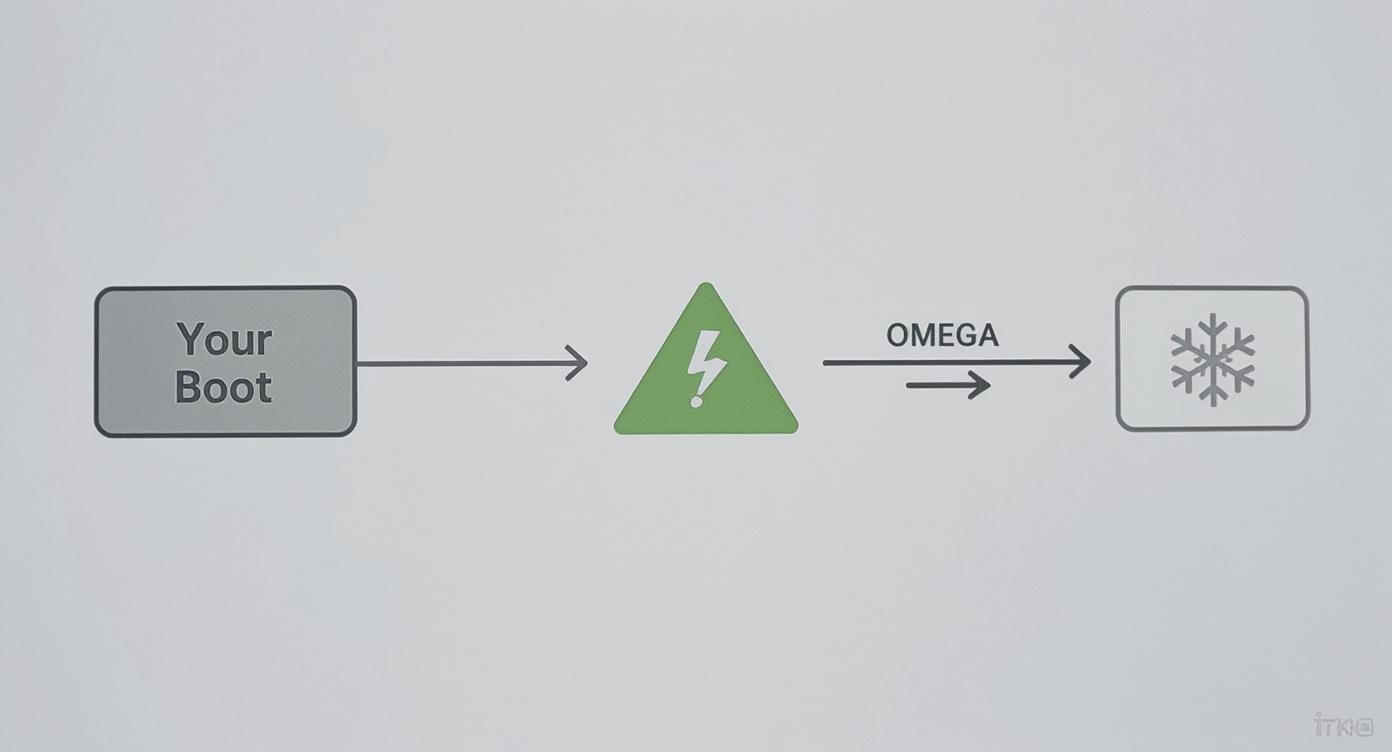
Knowing your CSA symbols is key for any job site. The flowchart above is a great visual guide to help you recognize the symbols for puncture resistance, electrical hazard protection, and other critical safety features.
Factoring in the Canadian Climate
Where you work in Canada plays a huge role in what boot you need. A boot that feels great during a mild Vancouver winter will leave you in a world of hurt during a brutal prairie winter in Alberta or Saskatchewan.
Pro Tip: Never underestimate the climate. The right amount of insulation is the difference between a productive, comfortable day and a miserable, unsafe one where you can’t even feel your toes.
Cold Weather Warriors
For anyone facing down frigid temperatures and deep snow, insulation becomes your number one priority. In work boots, insulation is measured in grams, and the right number depends on both the temperature and how active you are.
- 200g Insulation: This is perfect for crisp autumn weather or for guys who are constantly moving and generating a lot of body heat.
- 400g Insulation: This is the sweet spot for most Canadian winter conditions. It provides plenty of warmth without feeling too bulky, making it a great all-around choice for most outdoor work.
- 600g+ Insulation: This level is for the extreme cold. Think sub-zero conditions or jobs where you're more stationary, like a machine operator or a site supervisor who spends long stretches standing still in the cold.
Mild and Wet Conditions
On the flip side, if you work in a place with milder but wetter winters, like the Maritimes, going with too much insulation can backfire. Over-insulated boots make your feet sweat, and damp feet not only lead to blisters but can actually get cold faster.
In these rainy environments, your focus should shift to top-tier waterproofing and breathability. A non-insulated boot with a high-quality waterproof membrane is often the best call. It keeps the rain and slush out while letting sweat escape, so your feet stay dry and comfortable all day long. When you make the right choice, your boots stop being just footwear and become a true partner on the job.
Getting the Perfect Fit and Making Your Boots Last
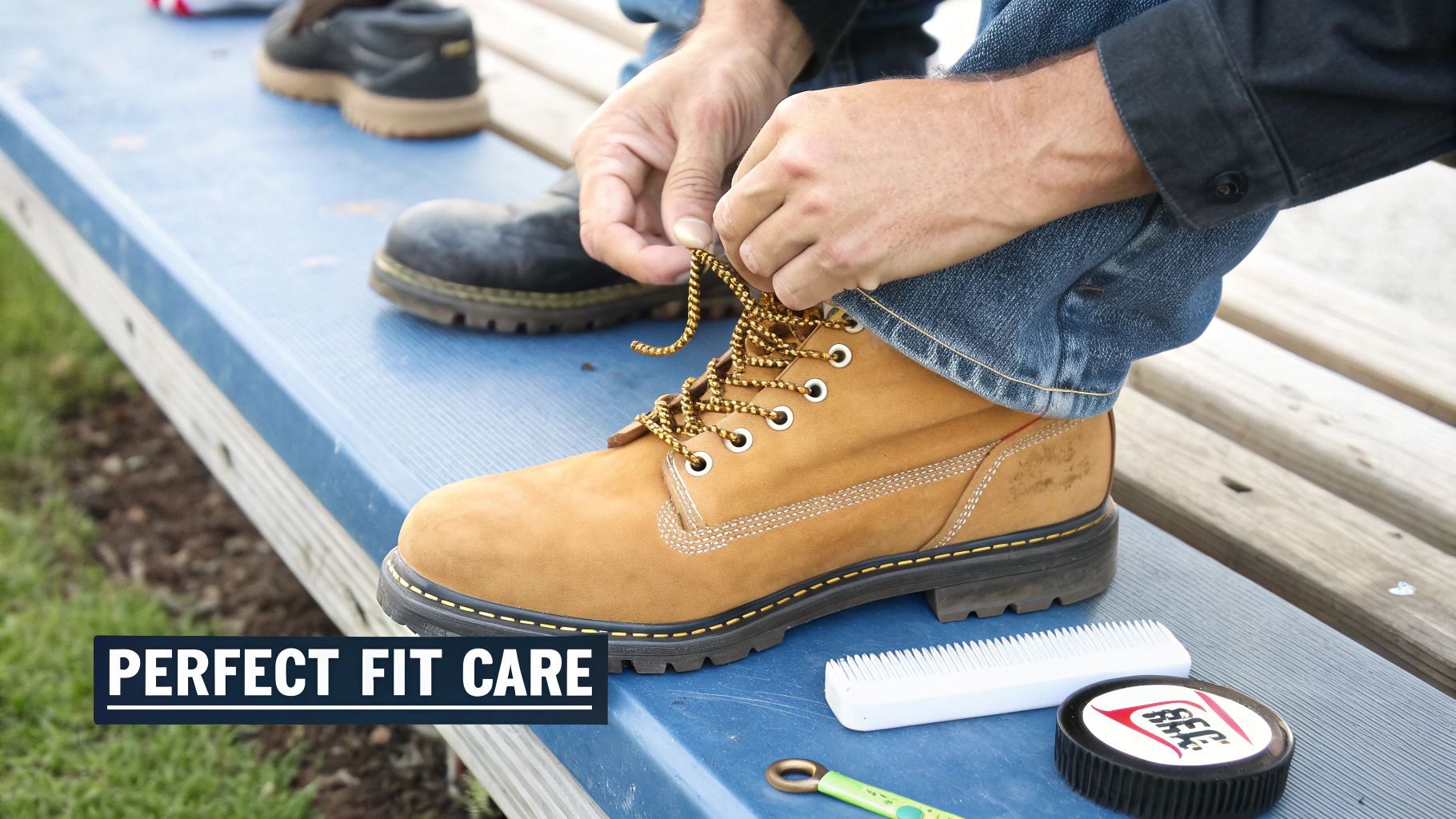
You can pick the most advanced pair of Timberland PRO work boots, but if the fit is off, you’ve wasted your money. Getting the size right is the absolute first step. A boot that fits perfectly works with you, not against you, day in and day out.
Once you've nailed the fit, a little upkeep goes a seriously long way. Think of your boots like any other high-performance tool in your kit—they need a bit of care to keep performing at their best. A few simple habits can add years to their life, protecting your investment and making sure they keep protecting you.
Finding Your Perfect Size
Finding the right fit isn't as simple as just picking your usual shoe size. The shape of your foot, the socks you wear, and even the time of day all play a part in getting it just right.
- Try on Boots in the Afternoon: Your feet swell as the day goes on. If you try on boots in the morning, they might feel painfully tight by quitting time. An afternoon fitting gives you a much truer sense of size.
- Wear Your Work Socks: Don't show up in thin dress socks. Bring the actual thick, cushioned socks you wear on the job site. It makes a huge difference in how the boot feels.
- Check the Space: You'll want about a half-inch of room between your longest toe and the end of the boot. Your heel shouldn't be slipping all over the place, either. A tiny bit of movement is fine, but too much is a recipe for blisters.
Breaking in Your New Boots
Brand new leather boots are notoriously stiff, but don't worry. A proper break-in period will mould them to your feet for a fit that feels almost custom-made. The secret is to take it slow.
Start by just wearing your new boots around the house for a couple of hours each day for about a week. This gives the leather a chance to soften up and conform to the unique shape of your foot without the pressure of a full workday. After that, you can gradually wear them for longer periods until they're ready for a full shift.
Pro Tip: If you notice any specific "hot spots" where the boot is rubbing or pinching, tackle them right away. Rubbing a bit of leather conditioner into those tight spots can help the material soften up and stretch out faster.
Long-Term Care and Maintenance
Once your boots are broken in and comfortable, a simple care routine will keep them in top shape for the long haul. Regular cleaning and conditioning are non-negotiable for keeping the leather healthy and the waterproofing intact.
Cleaning and Conditioning
At the end of a muddy day, give your boots a quick brush-off to get rid of any caked-on dirt and debris. For a deeper clean, a damp cloth and a proper leather cleaner will do the trick. Stay away from harsh detergents—they'll strip the leather of its natural oils, leading to cracking and damage.
After they're clean, always follow up with a quality leather conditioner. This puts moisture back into the leather, keeping it supple and preventing it from getting dry and brittle.
Waterproofing and Inspection
Even boots that come with a waterproof membrane need a little help over time. The factory-applied water-repellent coating eventually wears off. Using a boot protectant spray is an easy way to restore that barrier, making water bead up and roll right off again.
Finally, get into the habit of giving your boots a quick once-over. Check the soles for wear and tear, look for any seams starting to separate, and make sure the eyelets and hooks are still solid. Catching a small problem early can stop it from becoming a boot-killer down the road.
Finding Your Boots at Refinery Work Wear
Knowing the difference between steel toes and insulation ratings is one thing. Finding the right place to buy your Timberland PRO work boots is a whole other challenge, and it's just as important.
When you choose an expert supplier like Refinery Work Wear, you're not just buying a product. You're getting a partner who's genuinely invested in your safety and comfort right from the start.
Forget those big-box stores where the staff might not know a green triangle from an omega symbol. Our team lives and breathes the demands of Canadian trades. We'll give you personalized guidance to find the exact boot your job requires, so you walk away with certified protection that meets your worksite's specific needs.
Simplified Solutions for Teams and Individuals
Outfitting an entire crew? Our managed boot programs are a total game-changer. We handle all the logistics—sizing, selection, and getting the boots to your people—making it dead simple to ensure every team member has the right, compliant footwear. It streamlines the whole process and saves you a ton of administrative headaches.
We can also customize your order with things like reflective striping or company branding to meet any unique safety or uniform requirements you have.
Our Commitment to You: We want the entire process, from picking your boots to checkout and beyond, to be seamless and trustworthy. Our goal is for you to feel confident in your purchase, knowing it’s backed by expert support every step of the way.
Shipping and Support You Can Count On
We know that for professionals in tough industries, there's no time for delays or complicated returns. That’s why we’ve built our service around what you need most: speed, reliability, and zero stress.
- Canada-Wide Shipping: We ship directly to your home or job site, anywhere in Canada. With distribution warehouses ready to go, you'll get your gear fast.
- Worry-Free Exchanges: If the fit isn't perfect, no problem. Our straightforward exchange policy makes it easy to get the right size without any hassle.
- Manufacturer's Warranty: As an authorized dealer, every single pair of Timberland PRO work boots you buy from us is fully covered by the manufacturer's warranty against defects.
Choosing Refinery Work Wear means you get a lot more than just a pair of boots. You get a reliable supply partner who gets your industry and is committed to keeping you safe, comfortable, and productive on the job.
Common Questions About Timberland PRO Boots
Even after digging into the details, you might still have a few questions rolling around in your head about Timberland PRO work boots. That's perfectly normal. This section is all about giving you quick, straight-to-the-point answers to the questions we hear most often, so you can make your final choice with complete confidence.
Think of it as our rapid-fire round, tackling those last few nagging thoughts before you invest in your next pair of boots. We’ll cover everything from the nitty-gritty of the warranty to what you can realistically expect on the job.
Are Timberland PRO Boots Good Quality?
Absolutely. Timberland PRO has earned its reputation on job sites for a reason: solid construction and dependable performance day in and day out. They consistently get high marks for long-term durability, and that comes down to using top-shelf materials like full-grain leather and beefing up the construction in high-wear areas.
But these boots aren't just tough on the outside. They’re packed with smart features built for the modern tradesperson, making sure they can handle daily abuse without giving up the ghost.
Are Timberland PRO Boots Comfortable for Long Shifts?
Yes, and comfort is a big part of the Timberland PRO design. Many of their most popular models are built with their signature Anti-Fatigue Technology. The best way to think of it is like a suspension system for your feet, absorbing the shock of every step and actually returning energy back to you.
This makes them a lifesaver for anyone spending hours on their feet, especially on unforgiving surfaces like concrete or steel grating. The supportive, ergonomic fit helps cut down on foot, leg, and back fatigue, keeping you more comfortable right to the end of your shift.
Key Insight: The athletic, structured fit you'll find in many Timberland PRO boots gives you incredible support. This is a huge plus for workers who need solid stability when climbing ladders or walking across uneven ground.
Do Timberland Boots Have a Lifetime Guarantee?
Timberland doesn't offer a lifetime guarantee, which is pretty standard for work footwear. What they do provide is a solid manufacturer's warranty that covers any defects in materials or workmanship. It’s important to know this warranty won't cover normal wear and tear, damage from an accident, or issues from not caring for the boots properly.
When you buy from an authorized dealer like Refinery Work Wear, you have the peace of mind that your boots are fully covered by this warranty. We make sure you're getting a product that’s free from manufacturing faults, right out of the box.
How Long Do Timberland PRO Boots Last?
That's the million-dollar question, isn't it? The lifespan of any work boot really comes down to the job site conditions and how well you look after them. That being said, Timberland PRO boots are built for the long haul and, with a bit of proper care, can often last for several years.
Features like their tough Ever-Guard™ leather, reinforced rubber toe caps, and high-quality welt construction are all there to stretch the boot’s service life. Just taking the time to regularly clean and condition the leather will make a world of difference, helping them stand up to whatever your job throws at them.
At Refinery Work Wear Canada, we’re here to provide the certified protection you need with the expert guidance you deserve. Explore our complete selection of safety footwear and find the perfect pair to keep you safe and productive. Visit Refinery Work Wear Canada to gear up today.
Article created using Outrank