

Walk onto almost any Canadian job site, and you'll likely spot a pair of Keen work boots. They’ve earned their place by mixing the rugged DNA of an outdoor gear company with the serious protection required for industrial work. This combination delivers exceptional durability and all-day comfort, a must for pros who rely on their gear from coast to coast.
Why Keen Is a Trusted Name on Canadian Job Sites
When you see Keen boots on-site, you're not just looking at footwear. You're seeing a legacy of outdoor innovation, cleverly re-engineered for the modern tradesperson. The brand's reputation wasn't just built on good marketing; it was forged in the toughest Canadian environments, from Alberta’s demanding oil fields to Ontario's bustling construction zones.
This trust comes from Keen's knack for solving real-world problems. We all need boots that protect us from impacts and punctures, but we also need something that won't leave our feet aching after a 12-hour shift. Keen nails this by borrowing comfort technologies born on the hiking trail and building them directly into their safety footwear.
From Trails to Trades
Keen’s journey into the workwear world is a pretty smart one. The company got its start in 2003 and quickly made a name for itself with innovative outdoor shoes and sandals. By 2011, they'd skyrocketed to about $240 million in revenue, all thanks to designs that put function and comfort on equal footing—a perfect philosophy for the work boot market. This background in making tough, comfortable hiking boots gave them a massive head start when they started engineering safety footwear.
The idea is simple but powerful: if a boot can handle the unforgiving terrain of a mountain trail, its core principles of support, traction, and durability can be adapted to withstand the rigours of a construction site or industrial plant.
This approach gives us boots with robust safety features that don't feel like you’re wearing cinder blocks. Their commitment to quality materials and thoughtful design means every pair gives you a solid foundation to stand on. Of course, the next step is understanding the specific safety ratings that matter on our job sites, like those set by the Canadian Standards Association. To get up to speed, check out our complete guide on CSA-approved work boots.
Understanding Keen's Safety And CSA Certifications
Trying to make sense of the safety ratings on work boots can feel like you’re deciphering a secret code, but it’s absolutely critical for your protection on the job. When you lace up a pair of Keen work boots, you're not just wearing any boot; you're putting on footwear engineered to meet some of the toughest standards in Canada. The real trick is knowing what all those symbols and certifications actually mean for you day-to-day.
On any Canadian worksite, the Canadian Standards Association (CSA) is the gold standard for safety. You’ll find specific symbols stamped on compliant boots, and they’re not just for show—they're a quick visual guarantee of the protection you’re getting. In many trades and provinces, this isn't just a good idea; it's a mandatory requirement.
Decoding CSA Symbols
The two CSA symbols you’ll see most often on a pair of Keens are the Green Triangle and the Omega Rectangle. Think of them as badges of honour your boots have earned by passing some seriously tough tests.
-
The Green Triangle: This is the big one. It signals a Grade 1 protective toe and a puncture-resistant sole. That means the boot can handle impacts up to 125 joules—that’s like having a 22.7 kg (50 lb) block dropped on your foot from half a metre up. It also means the sole has a plate that will stop a nail from punching through.
-
The Omega Rectangle: This symbol is all about electrical safety. It means the boot provides resistance to electric shock (ESR). For anyone working around live electrical conductors, these boots offer a crucial secondary layer of protection from accidental contact.
Keen has always walked a fine line between its outdoor adventure roots and its serious commitment to industrial safety. This diagram really brings that dual identity to life.
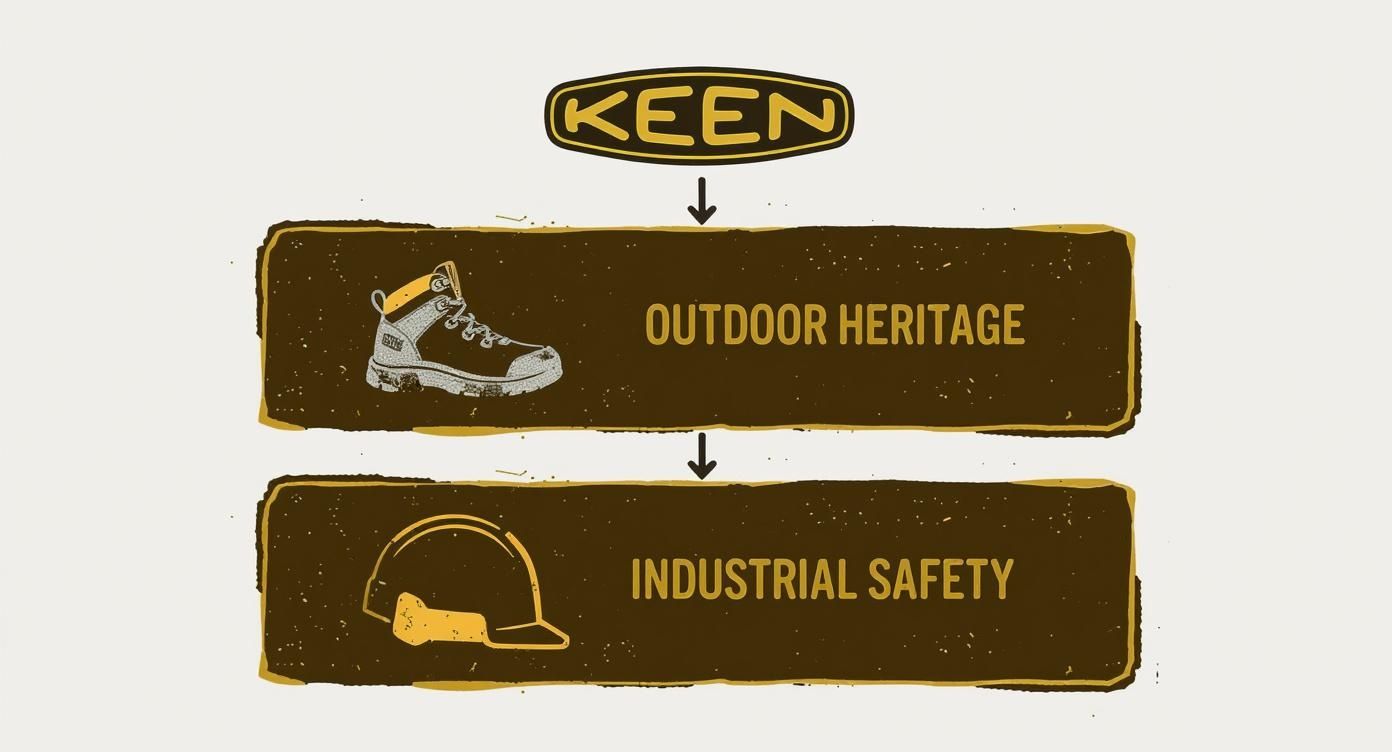
It’s a great visual of how the brand successfully blends rugged, trail-ready design with the non-negotiable safety features you need on a professional job site.
Choosing Your Safety Toe Material
Beyond the official CSA rating, the actual material your safety toe is made from plays a massive part in your daily comfort and the boot's overall performance. Keen gives you a few options, and each one has its own set of pros and cons.
The choice of safety toe isn't just a minor detail; it affects the boot's weight, how it feels in extreme temperatures, and your overall comfort after a long shift. We've laid out the key differences to help you decide which material is the right fit for your work.
Keen Safety Toe Types Compared
| Feature | Steel Toe | Composite Toe | Carbon-Fibre Toe |
|---|---|---|---|
| Protection Level | Highest impact resistance | Meets CSA standards | Meets CSA standards |
| Weight | Heaviest option | Lighter than steel | Lightest option available |
| Temperature | Conducts cold and heat | Does not conduct | Does not conduct |
| Metal Detectors | Will set them off | Will not set them off | Will not set them off |
| Best For | Traditionalists; maximum protection on a budget | Extreme temperatures; workers passing through security | All-day wear; reducing foot fatigue |
Ultimately, the best toe for you comes down to your specific job demands. If you need the absolute toughest protection and aren't worried about weight, steel is a classic. But if you're looking for modern, lightweight comfort without sacrificing safety, composite or carbon-fibre is the way to go.
There's a huge demand for better, more advanced safety footwear, and it's driving the whole industry forward. The U.S. work boot market, which includes big players like Keen Utility, was valued around USD 24 billion and is projected to hit USD 36.2 billion by 2032. That kind of growth shows just how much focus is being put on safety regulations in fields like construction and manufacturing.
Of course, your Keen boots are just one piece of the puzzle. A truly safe approach on Canadian job sites means thinking about all your personal protective equipment, including things like high-visibility workwear. Making sure you're covered from head to toe is what really matters. If you're looking for a solid selection of boots that meet these high standards, you can find a great range of CSA-certified safety work boots right here.
Exploring Keen's Comfort and Durability Technology
A great pair of work boots is so much more than just a steel toe. It's an entire system engineered from the ground up, with every single piece designed to fight off fatigue and keep you going strong. While the safety toe is non-negotiable, the real magic is in the tech that keeps you comfortable and stable through those gruelling 12-hour shifts.
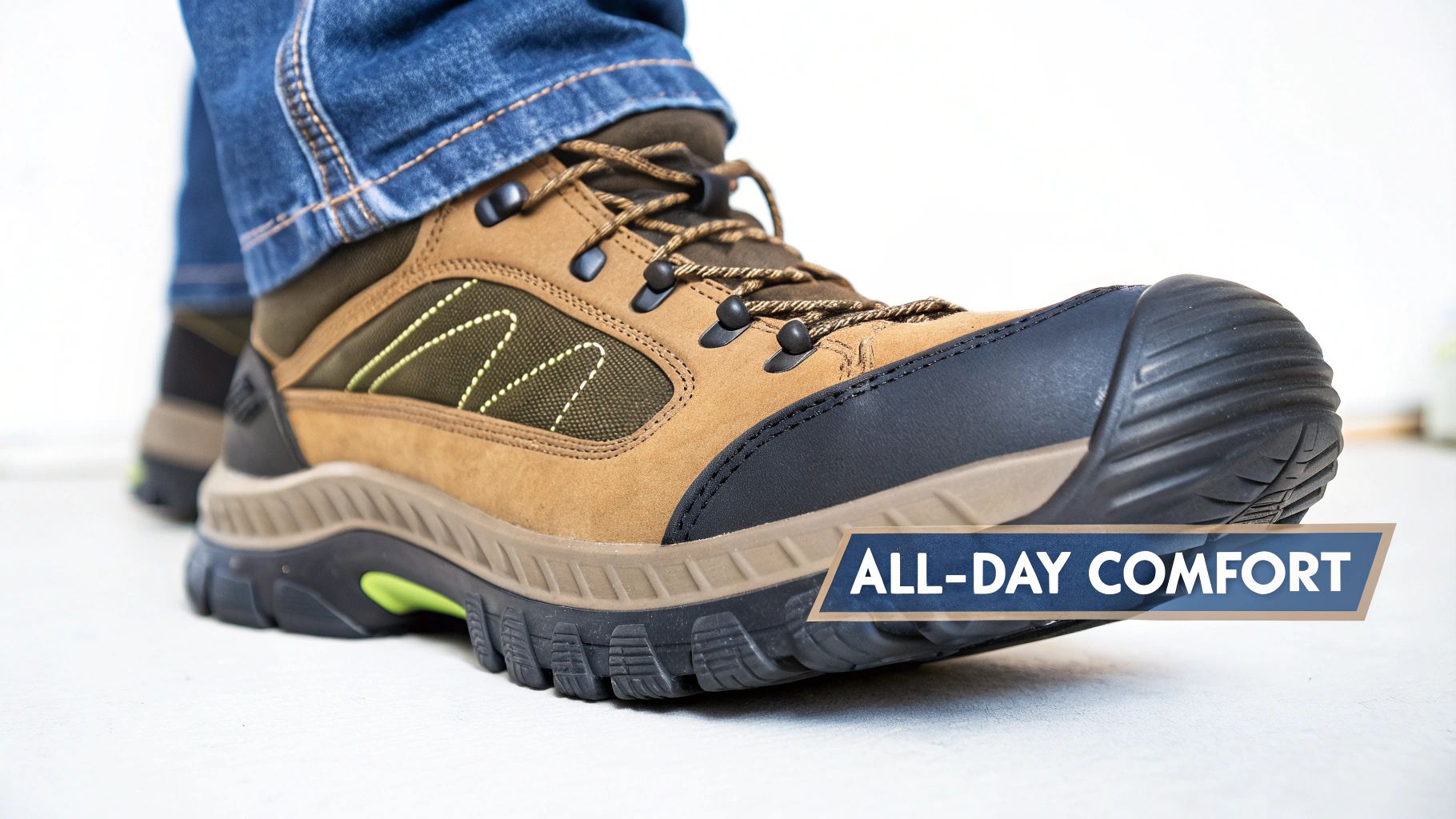
This is where Keen really shines. They pull from their deep well of experience in high-performance outdoor gear to build boots that can take on punishing job site concrete just as easily as they handle the elements. Let’s pull back the curtain on the core features that define their commitment to all-day comfort and toughness.
Advanced Waterproofing with KEEN.DRY
Nothing kills a workday faster than wet feet, but Keen has a powerful ace up its sleeve. The KEEN.DRY membrane is their own waterproof, breathable technology that's built right into the boot's lining.
Picture a high-tech rain jacket, but for your feet. The membrane is packed with microscopic pores, which are just the right size to let tiny sweat vapour molecules out, but they’re way too small for bigger water molecules to get in. This clever design means your feet stay dry from rain on the outside and sweat on the inside.
This two-way action is a game-changer for all-day comfort. It stops that clammy, swampy feeling you get from old-school rubber boots, which is a major cause of blisters and general misery.
Cushioning and Support Systems
Standing on hard surfaces all day is brutal. It takes a serious toll on your body. Keen tackles this head-on with specialized midsole and footbed technologies built to absorb shock and support your arches.
-
Luftcell Midsole: With this technology, air is literally injected into the midsole material. The result? A surprisingly light cushion that eats up impact without adding a bunch of weight or bulk to your boots.
-
Anatomical Footbeds: Keen’s footbeds aren’t just flat pieces of foam. They’re engineered to cradle the natural shape of your foot, providing excellent arch support and alignment. This helps take the strain off not just your feet, but also your knees and back over a long shift.
You can really see their hiking boot DNA here. A boot that keeps you stable on a rocky, uneven trail is perfectly equipped to give you that same solid footing on ladders, scaffolding, and rough job site terrain.
Superior Traction with KEEN.GRIP
Slippery surfaces are a constant threat in almost every trade. Your boot's outsole is your only connection to the ground, so its design and material are absolutely critical for your safety. Many Keen work boots come armed with the KEEN.GRIP outsole.
This outsole is crafted from a special oil- and slip-resistant rubber compound that holds its ground even on slick, wet floors. The tread patterns are also designed specifically to push water away and give you multi-directional grip. This gives you a secure, sure-footed feeling whether you’re walking on slick concrete or trudging through mud.
While Keen's technology is top-notch, it's always smart to see how it compares to other leaders in the field. To get a better sense of the landscape, you might want to check out our guide on Timberland PRO work boots. Understanding what makes each brand unique will help you lock in the perfect choice for your specific job.
How to Find Your Perfect Keen Boot Fit
Getting the fit right isn't just about avoiding a long, uncomfortable day. It's a critical safety measure. A boot that’s too loose can cause you to trip, and one that’s too tight creates blisters and fatigue. That’s a recipe for an accident. Luckily, Keen work boots are known for their unique anatomical shape, which is a fantastic starting point for all-day comfort.
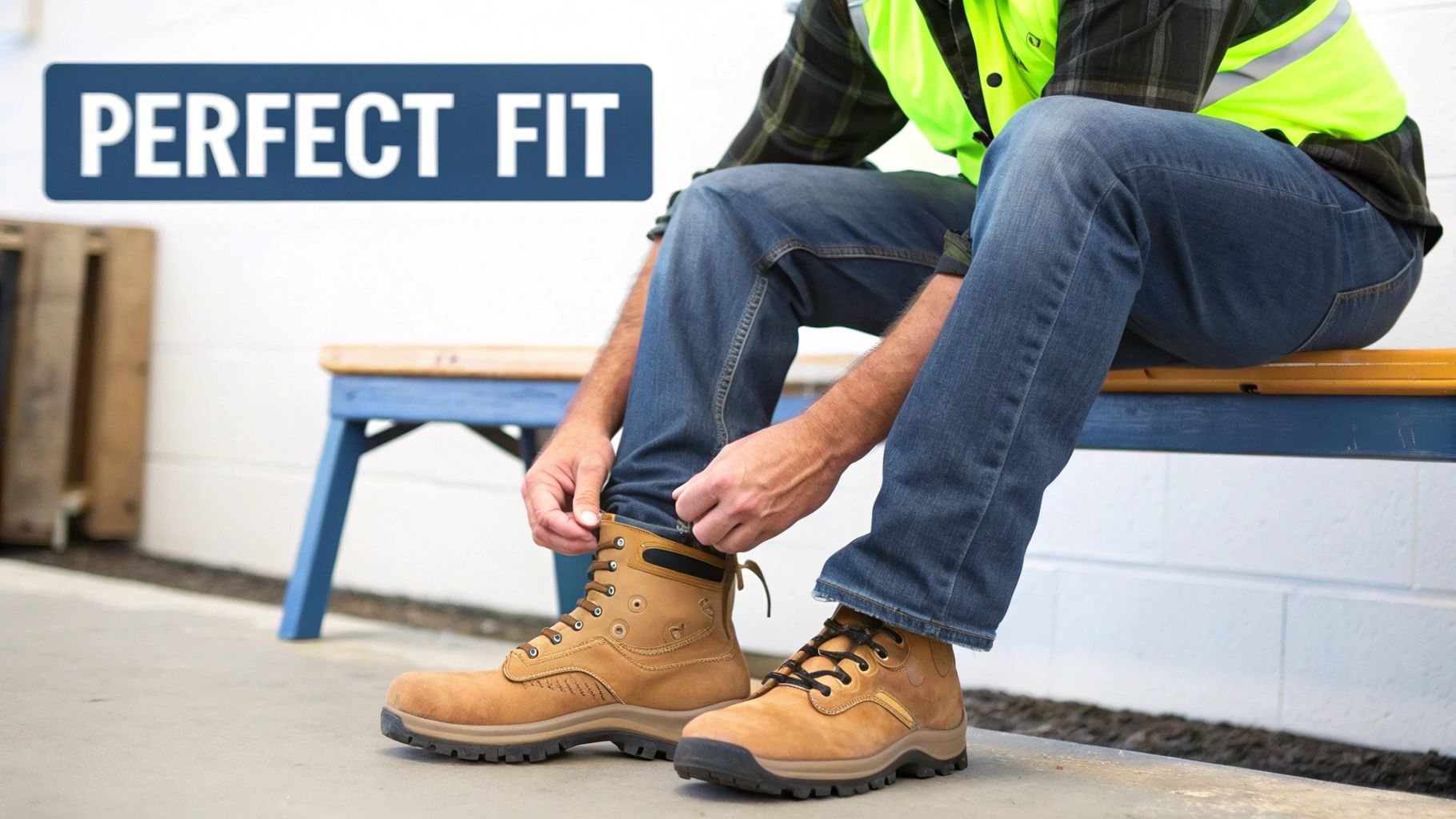
One of the first things you'll notice is the brand's signature asymmetrical toe box. Most boots are symmetrical, which can pinch your toes together. Keen actually designs the left and right boots to match the natural, slightly different shape of your feet. This gives your toes much more room to spread out, which is huge for boosting your stability and preventing that cramped feeling on a long shift.
Mastering the Try-On Process
To really nail the fit, timing and technique are everything. Your feet naturally swell throughout the workday, so it’s always best to try on new boots in the afternoon or evening. This simple trick ensures you're getting a size that will stay comfortable when your feet are at their largest.
When you're ready to try on a pair of Keen work boots, follow these steps for the most accurate assessment:
- Wear Your Work Socks: This is a big one. Don't just grab any thin socks. Bring the same thick, cushioned socks you actually wear on the job, as they'll take up a surprising amount of room.
- Check the Length: Once the boot is laced up, you should have about a thumb's width (~1.25 cm) of space between your longest toe and the very end of the boot. Your toes should never feel jammed against the front.
- Test the Heel: Walk around the store for a bit. Your heel should feel securely locked in place with very little slipping or lifting. A tiny bit of movement is totally normal, but if it's constantly rubbing, that’s a red flag for future blisters.
A common mistake is buying boots that are too snug, thinking they'll stretch out a lot. While quality leather does have a break-in period where it moulds to your feet, the core length and width of the boot aren't going to change.
The Break-In Period and Width
Speaking of breaking them in, don't expect your new Keen boots to feel like slippers right out of the box. High-quality leather and tough, durable materials need some time to get acquainted with your feet. A good strategy is to start by wearing them around the house for a few hours at a time before you commit to a full 12-hour shift on site. This allows the leather to soften and conform to your foot's unique shape without causing you grief.
While Keen boots are generally known for a roomier fit, paying attention to the width is just as important. If your foot feels cramped from side-to-side, look for their wide (EE) sizing options. Getting the width right is just as crucial as the length for preventing painful pressure points. You can also fine-tune the fit for maximum comfort by pairing your new boots with the right boot accessories like a good set of supportive insoles.
Choosing the Right Keen Boot for Your Canadian Trade
Picking a work boot isn't just about grabbing your size off the shelf. It’s about choosing the right tool for the job. Canada's wildly diverse climates and tough-as-nails trades demand footwear that can handle everything from a bone-chilling Prairie winter to the relentless downpour of a B.C. autumn. To find the right Keen boot, you have to look past the basics and zero in on the features that will actually make a difference on your job site.
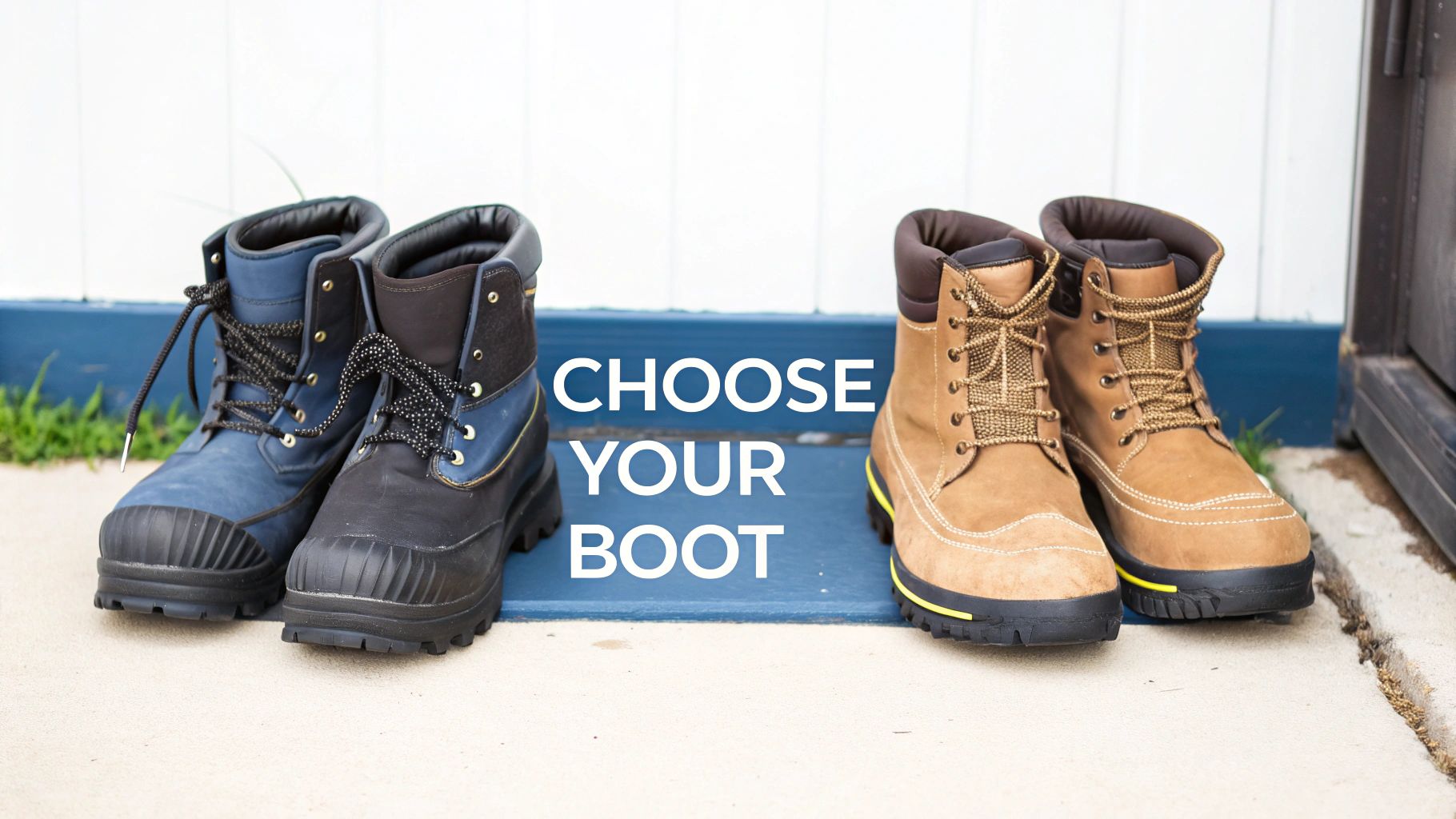
Think about it like this: you wouldn't use a sledgehammer for delicate trim work. The same logic applies to your boots. An electrician in Saskatchewan needs a completely different kind of protection than a landscaper in the Fraser Valley, and Keen's massive lineup is built to meet these very specific needs.
To make things easier, we've put together a quick guide matching common Canadian industries with the Keen boots best suited for the job.
Recommended Keen Boots by Canadian Industry
| Industry / Trade | Key Requirements | Recommended Keen Model(s) |
|---|---|---|
| Construction & Carpentry | Puncture resistance, all-day comfort, slip-resistant outsoles, waterproof membrane for all-weather work. | Cincinnati, Troy, Camden |
| Electrician / Utilities | Electric Shock Resistance (ESR), composite toe (non-conductive), insulation for cold climates, slip resistance. | Philadelphia, San Jose, Independence |
| Landscaping & Outdoor Work | KEEN.DRY waterproofing, KEEN.GRIP outsoles for mud and wet grass, comfortable footbeds for long hours on your feet. | Pittsburgh, Vista Energy, Flint II |
| Warehouse & Logistics | Lightweight design (composite or aluminum toe), anti-fatigue technology, non-marking outsoles, breathability. | Sparta, Vista Energy, Chicago |
| Heavy Industry & Manufacturing | Heavy-duty protection (steel toe), metatarsal guards, heat-resistant outsoles, puncture-proof plates. | Philadelphia, Camden, Troy |
| Welding & Metalwork | Leather upper for spark resistance, heat-resistant outsole, metatarsal guard for impact protection from heavy materials. | Philadelphia, Independence |
This table is a great starting point, but let's dig a little deeper into why these features matter for specific environments.
Boots for Cold and Electrical Hazards
If you're an electrician or a utility worker facing a harsh Canadian winter, the right boot is a non-negotiable piece of gear. You’re fighting two battles at once: one against the cold, and another against electrical shock.
This is where a composite toe becomes your best friend. Unlike steel, composite materials don't conduct the cold, which is a massive relief when the temperature plummets. You also need to look for the CSA Omega Rectangle symbol, which guarantees the boot is rated for Electric Shock Resistance (ESR). Combine those features with a solid insulation package, and you’ve got a boot that keeps your feet warm, dry, and protected from the unique dangers of your trade.
Boots for Wet Climates and Unstable Surfaces
Now, picture a framer or a general contractor slogging through a rainy season on the West Coast. The biggest enemies here are water and slick surfaces. Staying dry, comfortable, and—most importantly—upright is the name of the game.
For these conditions, you should be laser-focused on boots with the KEEN.DRY waterproof membrane. This tech is brilliant because it blocks water from getting in but still lets sweat vapour escape, so your feet don't get that dreaded clammy feeling. Pair that with outsoles featuring KEEN.GRIP, which use an oil- and slip-resistant rubber specifically designed to bite into slick surfaces like wet lumber, mud, or smooth concrete.
The right Keen work boots do more than just protect your feet; they enhance your stability and confidence, allowing you to focus completely on the task at hand without worrying about the ground beneath you.
Keen’s ability to develop these specialized solutions comes from their sheer scale. With an estimated annual revenue floating around $342 million, they can pour serious resources into research and development. This allows them to tackle the real-world problems tradespeople face, from extreme weather to very specific job site hazards. You can get a better sense of Keen's market position and growth over on Growjo.com.
In the end, choosing the perfect boot comes down to being honest about what your workday really looks like. When you match the specific features of a boot to the demands of your job, you can’t go wrong. For a hand-picked selection built for Canadian safety standards, check out our collection of Keen CSA-approved footwear.
Common Questions About Keen Work Boots
Even after digging into all the tech and features, you probably have a few more questions before pulling the trigger on a new pair of Keen work boots. Getting straight answers is the only way to feel good about investing in your safety and comfort on the job. That's why we've put together this section to tackle the most common questions we hear from Canadian tradespeople just like you.
We've gathered all the essential info you need, from CSA approval to long-term value, to help you lock in your decision and get the most out of your new gear.
Are Keen Work Boots CSA Approved for Canadian Job Sites?
Yes, absolutely. A huge part of the Keen Utility line is built specifically for the Canadian market and is fully CSA approved. It's one of the first questions we get, and for many of their most popular models, the answer is a confident yes.
When you're looking at a pair of boots, the proof is right on the side. Just look for the official CSA patches.
- The CSA Green Triangle patch is your confirmation that the boot has a Grade 1 protective toe and a puncture-resistant sole. This is the standard for most construction and industrial sites.
- The Omega Rectangle patch tells you it provides Electric Shock Resistance (ESR), a non-negotiable feature for electricians, linemen, and utility workers.
The most important thing is to always double-check that the specific model you want explicitly lists the CSA standards required by your employer or job site.
How Long Do Keen Work Boots Typically Last?
This is the million-dollar question, and the honest answer is: it depends. The lifespan of any work boot, including a pair of Keens, is tied directly to your work environment, how often you wear them, and how you take care of them.
As a general guideline, for someone in a heavy-duty trade like construction or welding who's on their feet all day, every day, a pair might last anywhere from 6 to 12 months. If you're in a lighter-duty role or rotate between different footwear, they can last much, much longer. That built-in durability is a big reason so many people swear by the brand.
What Is the Best Way to Clean and Maintain My Boots?
Proper care is the single best thing you can do to get more life out of your Keen work boots and keep them performing at their best. A few simple habits can make a huge difference.
First, try to knock off any loose dirt and mud at the end of your shift. For leather boots, a soft brush and a damp cloth will take care of any stubborn grime. The critical part is letting them air dry naturally. Never use a direct heat source like a furnace vent or a fireplace—it will dry out the leather and cause it to crack.
Once your boots are fully dry, hit them with a quality leather conditioner. Think of it like moisturizer for your skin. It keeps the leather flexible, prevents cracking, and boosts its natural water resistance, which helps technologies like KEEN.DRY do their job properly.
Are Keen Work Boots Worth the Price?
It's true that Keen work boots sit in the mid-to-high end of the price range, but their real value isn't just the price tag—it's the combination of safety, all-day comfort, and serious durability. Most pros find that the initial investment pays for itself pretty quickly.
That price reflects the quality of the materials and the smart engineering that goes into every pair, from their own KEEN.DRY waterproof membranes to the Luftcell air-injected midsoles that fight fatigue. When you factor in feeling better after a long shift, having reliable protection from site hazards, and not having to buy new boots every few months, the price starts to look pretty reasonable. For anyone who spends their day on their feet in tough conditions, they are a fantastic investment.
At Refinery Work Wear Canada, we get it—the right boots are one of the most important tools in your kit. We're proud to stock a wide selection of CSA-approved Keen footwear designed to handle the toughest Canadian job sites.