

Picking the right pair of womens steel toe boots isn't just about comfort—it’s a critical part of your daily safety and well-being on the job site. The best boots strike the perfect balance between certified protection, an anatomical fit actually designed for women, and the rugged durability needed to handle tough Canadian work environments.
Your Essential Guide to Finding the Right Safety Boots
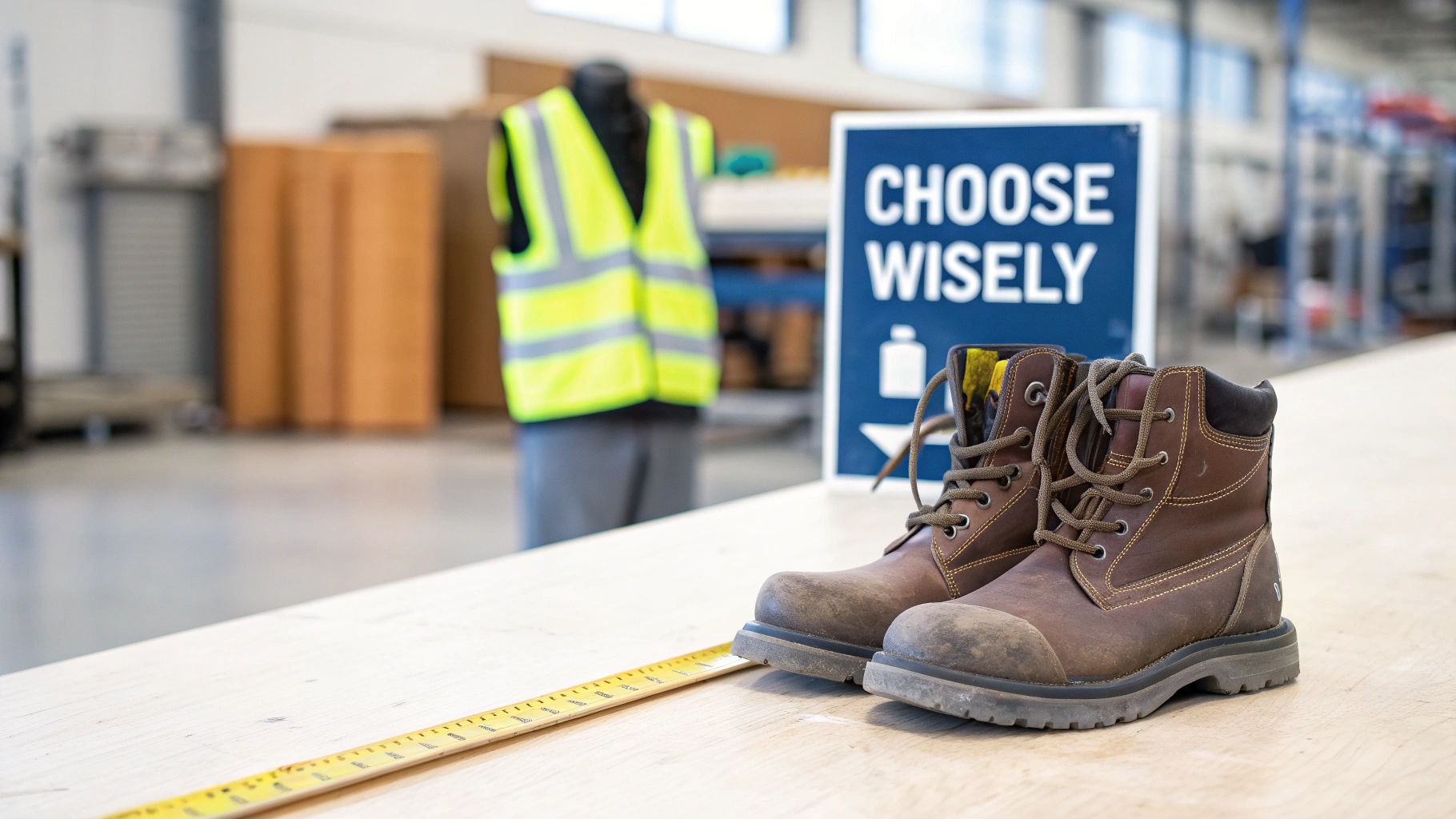
Finding the ideal safety boot is a lot more involved than just grabbing a size off the shelf. For women in the trades, manufacturing, or any industrial job, your boots are a foundational piece of your personal protective equipment (PPE). Think of it as an investment in preventing injuries, cutting down on fatigue, and boosting your performance through those long shifts.
This guide is your roadmap. We’re here to help you choose a pair of womens steel toe boots that deliver on every front—protection, comfort, and longevity—with a special focus on the demands of Canadian job sites. We’ll get past the basics and dig into the critical details you really need to know.
What This Guide Covers
This isn't just another top-ten list. Our goal is to break down all the technical jargon into practical advice you can actually use. We want you to feel confident picking out a pair of boots that truly meets the demands of your job, whether you're on a construction site, in a warehouse, or on a factory floor.
Here's a look at what we'll cover:
- Decoding CSA Safety Ratings: We'll explain what those little coloured tags really mean for your on-the-job protection.
- Toe Protection Explained: You'll learn the real-world differences between steel and composite toe caps and figure out which one is right for you.
- Beyond the Toe Cap: We’ll explore why things like puncture resistance, sole materials, and waterproofing are just as important.
- The Importance of a Woman-Specific Fit: We’ll show you exactly why simply sizing down a men's boot just doesn't cut it.
By the end of this guide, you won't just be buying a pair of boots—you'll be making a smart, informed decision about your daily safety and comfort. This knowledge is key to finding footwear that works as hard as you do.
Ready to find your perfect pair? Getting familiar with a quality selection of women's work boots can give you a head start on the features and styles that meet Canada's tough safety standards. Let's get you equipped to make the best choice for your work.
Decoding Canadian Safety Standards for Your Boots
When you're choosing a pair of womens steel toe boots in Canada, the small, colourful tags hanging off them are your most important guide. They’re not just for show; they're a visual language that tells you exactly what kind of protection a boot offers. This whole system is governed by the CSA Group standard Z195—the official benchmark for all safety footwear sold across the country.
Think of these tags as a cheat sheet for your safety. Instead of digging through dense technical manuals, you can just glance at a symbol and know if a boot is built for your specific work environment. For women in trades where the hazards change from site to site, understanding this language isn't just helpful—it's absolutely essential for staying safe on the job.
The Green Triangle: The All-In-One Protector
The most common symbol you'll see on safety footwear is the green triangle. This is the CSA's top-tier rating for general-purpose work boots and is a mandatory requirement on most Canadian job sites.
So, what does it actually mean? A boot sporting a green triangle has two key features built right in:
- Grade 1 Toe Protection: This protects your toes from impacts up to 125 joules. To put that in perspective, it’s like a 22.7 kg (50 lb) object being dropped from a height of just over half a metre.
- Puncture-Resistant Sole: There's a plate built into the sole designed to stop sharp objects like nails, screws, or rebar you might step on from piercing through.
In simple terms, the green triangle means you’re getting both a protective toe cap and a puncture-resistant sole. It’s the foundational standard for anyone working in construction, manufacturing, or warehousing where both impact and puncture hazards are a daily reality.
Understanding these standards is so important because the safety toe work boot market in North America is driven by strict occupational safety regulations. Here in Canada, sectors like construction, manufacturing, and our growing mining industry really push the demand for certified footwear. After all, tough, puncture-resistant boots are vital for keeping workers safe underground and on site. You can discover more insights about this market trend on archivemarketresearch.com.
Specialized Protection Beyond the Basics
While the green triangle is the workhorse of safety ratings, some jobs throw more specialized dangers your way, like electrical currents. That’s where the other symbols come into play, offering specific safeguards for unique work environments.
It's critical to know the specific hazards of your workplace to make sure your boots have the right rating. A mismatch can leave you unknowingly exposed to serious risks.
White Rectangle with Omega Symbol: Electrical Shock Resistance
If you spot a white rectangle with a Greek omega symbol (Ω), it means the boot offers Electrical Shock Resistance (ESR). These boots are designed to insulate you from the ground, helping to protect against accidental contact with live electrical wiring.
They’re made with non-conductive materials in the sole and heel that can stand up to 18,000 volts at 60 Hz for one minute without conducting a significant current. For electricians, utility workers, or anyone working near high-voltage gear, this symbol is a non-negotiable.
Yellow Rectangle with SD: Static Dissipation
A yellow rectangle with "SD" tells you the boots are Static Dissipative. These boots are engineered to safely channel your body's static electricity to the ground in a controlled way. This prevents a static spark that could ignite flammable materials or damage sensitive electronic components.
They are crucial for workers in:
- Electronics manufacturing facilities
- Chemical plants and refineries
- Any area with explosive gases or dust
Each of these symbols is a specific defense mechanism built into your boots. To learn more about how to interpret these and other CSA symbols, you can explore our detailed guide on CSA work boot standards. By taking a quick moment to check the tags, you can confidently pick out the womens steel toe boots that provide the exact protection your job demands.
Steel vs Composite Toe: Which Protection Is Right for You?
When you're picking out your next pair of safety boots, one of the biggest choices you'll make is the material inside that protective toe cap. The two main players in the game are traditional steel and modern composite materials. Both are CSA-certified and get the job done, but they work in very different ways, making each one a better fit for specific jobs and environments.
Think of it like choosing between a classic bank vault and modern body armour. The bank vault—your steel toe—is unbelievably strong and has been the go-to for decades, but it's heavy and pretty rigid. Then you have the body armour—the composite toe—which is engineered with advanced, lightweight materials to give you incredible protection without all the weight, offering more flexibility and some high-tech perks.
This choice goes beyond just impact protection. It's going to affect how your feet feel at the end of the day, your overall energy levels, and even how your boots handle different weather. Let's break down the real-world differences to help you figure out what's right for your job.
The Case for Classic Steel Toes
Steel has been the gold standard for safety toes for a long time, and for good reason. It offers maximum protection against crushing and impact forces, often going above and beyond the minimum CSA standards. Because steel is so incredibly strong, manufacturers can actually make the toe caps a bit thinner than their composite cousins while still providing the same level of safety.
This can sometimes give steel toe boots a slightly less bulky look. But their main drawback is weight. All that metal adds up, and over a long 10-hour shift, that extra heft can really lead to tired feet, making you work harder with every single step.
Another big thing to keep in mind with steel is that it's a great conductor. It transfers both temperature and electricity pretty easily, which can be a major deal-breaker depending on where you work.
The Advantages of Modern Composite Toes
Composite toe caps are the newer kid on the block, built from non-metallic materials like carbon fibre, Kevlar, or specialized plastics. They're designed to meet the very same CSA Z195 safety standards as steel but come with a whole different set of benefits that are a game-changer for workers in certain fields.
Their biggest selling point? They are significantly lighter. By ditching the heavy steel, composite toe boots can dramatically cut down on foot fatigue. This makes them a fantastic choice for women who are always on their feet, climbing ladders, or walking long distances across a job site.
A key benefit of composite materials is their non-conductivity. They do not transfer cold, making them far more comfortable for anyone working outdoors through a harsh Canadian winter. This thermal insulation helps keep your feet warmer and safer from frostbite.
Because they’re completely non-metallic, composite toe caps also won't set off metal detectors. This is a huge convenience for anyone working in secure facilities like airports, government buildings, or power plants. Some top-tier models, like the Timberland PRO Boondock composite toe boot, pair this lightweight protection with other must-have features like waterproofing and insulation.
Steel Toe vs. Composite Toe: A Head-to-Head Comparison
To make the choice clearer, here’s a straightforward breakdown of how steel and composite toes stack up against each other across the most important features.
| Feature | Steel Toe | Composite Toe (Non-Metallic) |
|---|---|---|
| Weight | Heavier, which can cause foot fatigue over long shifts. | Significantly lighter, improving all-day comfort. |
| Protection | Maximum impact and compression resistance. | Meets the same CSA standards but can be bulkier. |
| Temperature | Conducts cold and heat, making it less ideal for extreme weather. | Does not conduct temperature, keeping feet warmer in the cold. |
| Conductivity | Conducts electricity; not suitable for certain electrical hazard work. | Non-conductive, making it safe for electrical hazard environments. |
| Security | Will set off metal detectors. | Will not set off metal detectors, ideal for secure sites. |
| Cost | Generally more budget-friendly. | Can be slightly more expensive due to advanced materials. |
Ultimately, looking at them side-by-side shows there's no single "best" option—only the best option for you and your job's specific demands.
Making the Right Choice for Your Job
So, how do you decide? It really comes down to what your typical workday looks like.
- Choose Steel Toe If: You work in a high-risk environment with serious impact hazards, like heavy manufacturing or logging, and you want the absolute maximum, time-tested protection you can get.
- Choose Composite Toe If: You have long shifts with a lot of walking, you work outside in the cold, or you regularly pass through metal detectors. The lighter weight and thermal benefits are huge advantages here.
This decision tree gives you a great visual for matching CSA boot ratings to the most common hazards you'll find on site, from punctures to electrical risks.
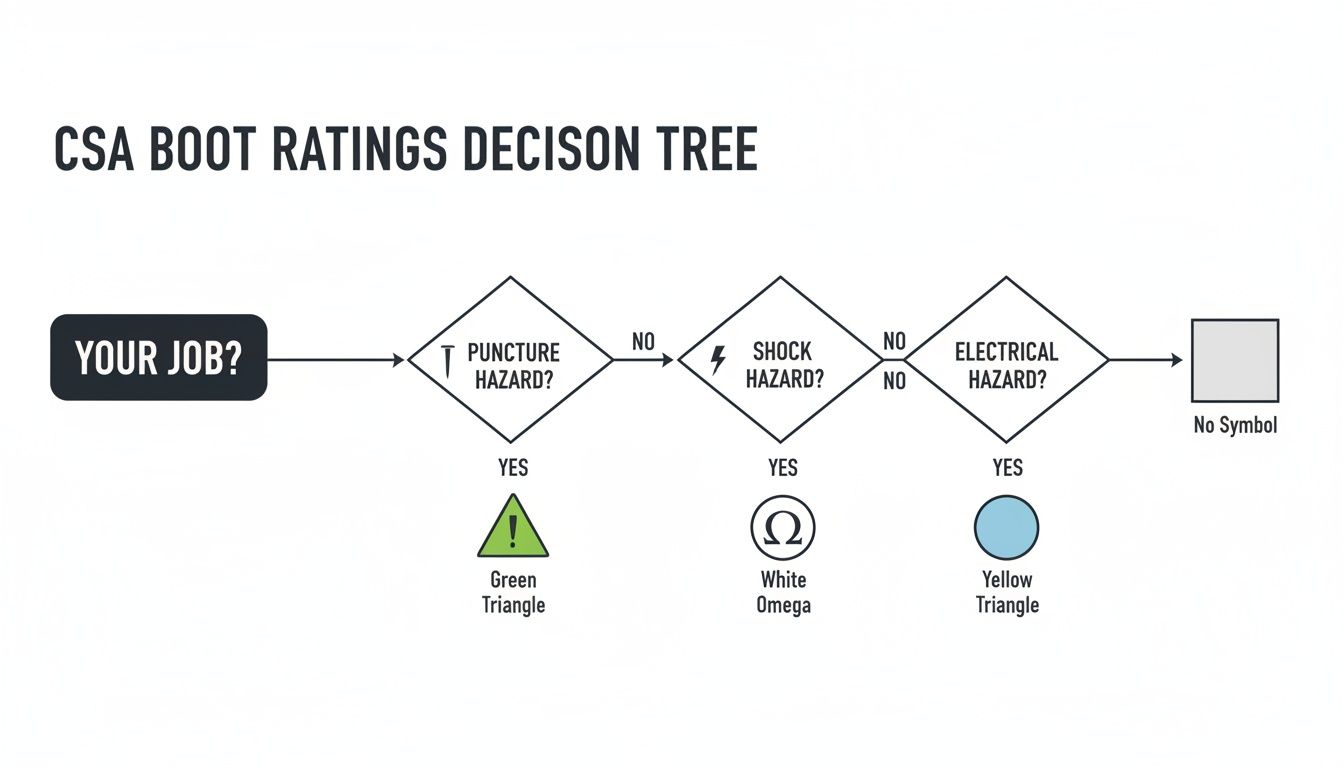
As you can see, the presence of specific hazards like sharp objects on the ground or electrical currents directly points you to the required CSA rating, making sure you get the right protective features for the job.
Essential Features Beyond the Protective Toe
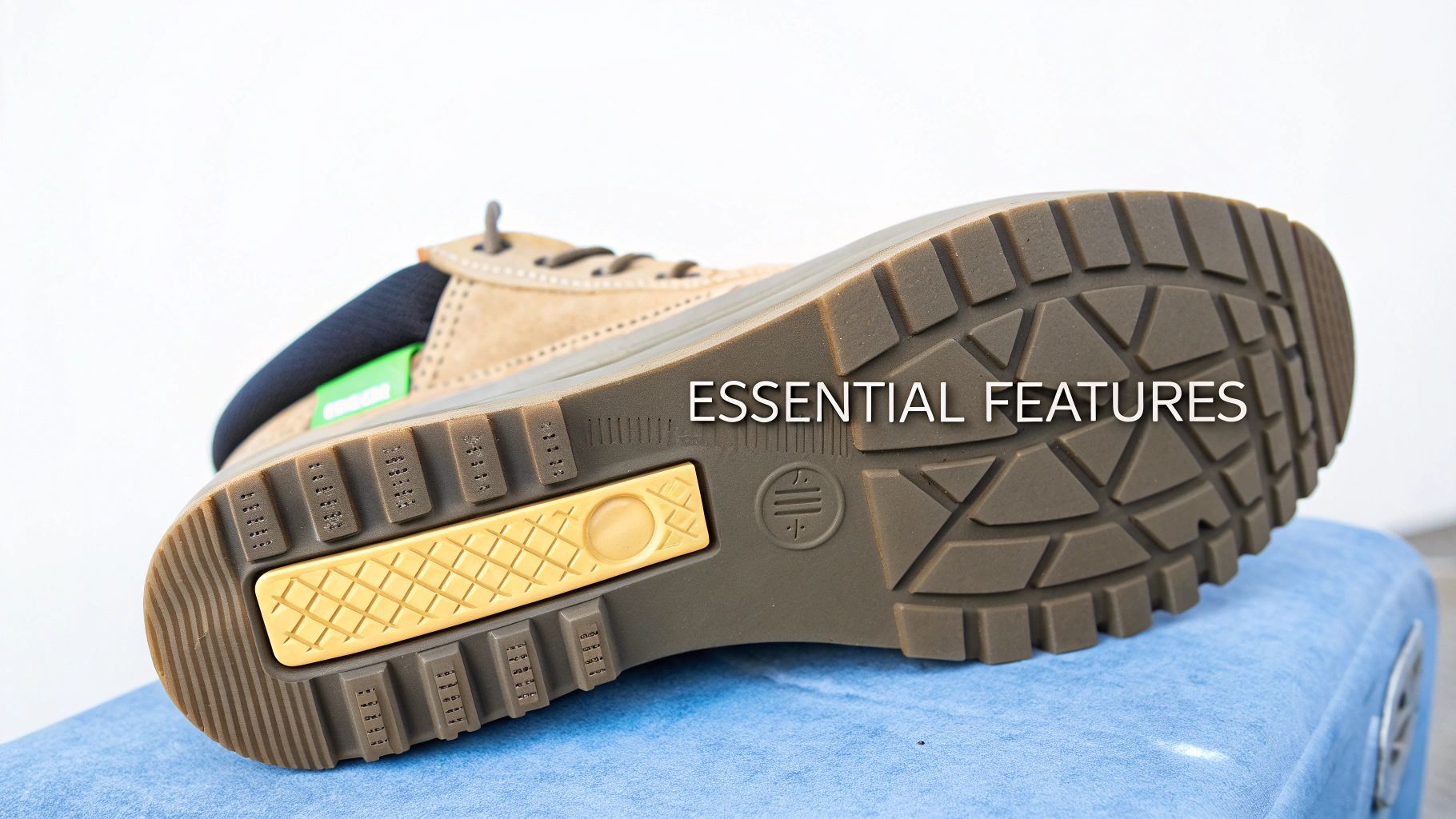
While the protective toe cap gets all the attention, a truly great pair of womens steel toe boots is defined by what’s happening underneath and all around it. Total safety and comfort aren't about one feature; they come from a complete system working in harmony. Think of it like a car—a helmet is great, but you still need a solid frame, good tires, and reliable brakes to be truly safe on the road.
In the same way, features like puncture resistance, sole construction, and weather protection are the non-negotiables that elevate a boot from "good enough" to an indispensable piece of your daily kit. These elements tackle the real-world hazards of Canadian job sites, from scattered nails and icy patches to soaking wet conditions. Let's break down these critical components that give you true, 360-degree protection.
Defending From Below With Puncture Resistance
Some of the most common dangers on a construction site, in a workshop, or any industrial area come right from the ground up. Discarded nails, sharp bits of metal, or stray screws can punch through a standard sole in an instant, causing a serious and painful injury. This is exactly where a puncture-resistant plate becomes your most important line of defence.
This plate is a thin but incredibly tough layer built right into the midsole of the boot, sitting between the outsole and your foot. Its one job is to stop sharp objects dead in their tracks. Any boot with the CSA Green Triangle automatically includes this feature, so you know you’re covered from impacts above and sharp hazards below.
This underfoot shield is your safeguard against the unseen. It lets you walk across a debris-strewn site with confidence, knowing you’re protected from the kind of hazards that could otherwise mean an immediate trip to the emergency room.
Understanding Boot Soles for Stability and Comfort
The sole of your work boot is where the rubber meets the road—or the concrete, mud, or slick steel flooring. The material and tread pattern of the outsole have a direct impact on your stability, comfort, and overall safety. Different compounds offer unique benefits, and the right choice really depends on where you spend your days.
At its core, a boot’s sole needs to do three things exceptionally well: provide grip, absorb shock, and stand up to daily abuse.
Rubber for Unbeatable Grip
For pure slip resistance, it's tough to beat rubber. Its natural composition delivers excellent traction on wet, oily, or uneven surfaces. This makes rubber outsoles the top choice for outdoor work, manufacturing plants, and anywhere else spills are a part of the job. High-quality rubber is also highly resistant to abrasions and chemicals, which means it will last.
Polyurethane for Lightweight Cushioning
Polyurethane (PU) soles are known for being incredibly lightweight and flexible. Shaving weight off your boots makes a huge difference in foot fatigue over a long shift. While they still offer good slip resistance, the main advantage of PU is its fantastic shock absorption. It provides a cushioned feel that takes the strain off your joints after hours on your feet.
Preparing for Canadian Weather Conditions
Working in Canada means being ready for anything Mother Nature throws at you, from bone-chilling winters to soaking wet springs. Your work boots have to be up to the challenge, keeping your feet warm, dry, and comfortable no matter what. That’s where two key technologies come in: insulation and waterproofing.
And remember, proper weather protection isn't just about comfort—it's a critical safety issue. Cold, wet feet can lead to a loss of focus, frostbite, and other health problems that put you at risk on the job.
Insulation for Cold Weather Protection
When the temperature plummets, insulation is non-negotiable. Thinsulate™ is a popular and effective material found in many womens steel toe boots, and its warmth is measured in grams.
- 200g: Perfect for cool conditions or high-activity jobs where you’re generating a lot of your own heat.
- 400g: This is the sweet spot for most cold Canadian winter days, offering solid warmth without feeling bulky.
- 600g+: Built for the extreme cold or for jobs where you’re stationary, like operating machinery or supervising a site in the dead of winter.
Waterproofing for Wet Environments
Staying dry is everything. Look for boots that feature a waterproof membrane, like the famous GORE-TEX brand. These membranes are made of a microporous material that physically blocks water from getting in, but is still breathable enough to let sweat vapour escape.
This keeps your feet dry from both the outside elements and your own perspiration, preventing the blisters and discomfort that come with damp socks. A fully waterproof boot means you can step in a puddle or work through a downpour without giving it a second thought.
How to Find the Perfect Fit for All-Day Comfort
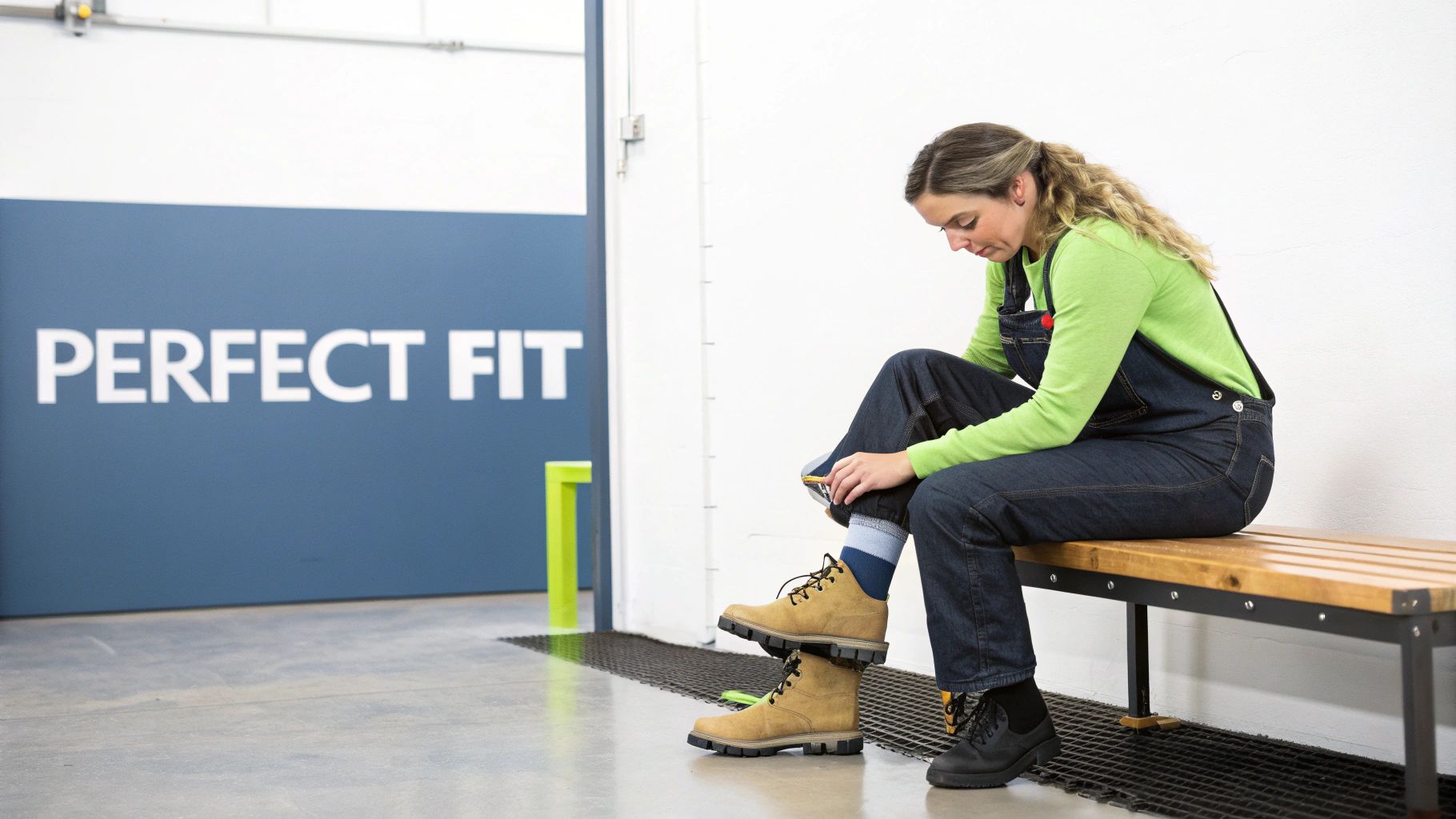 Even the most advanced safety boot on the market is completely useless if it causes you pain with every single step. For women working in the trades and on industrial sites, a poor fit is one of the biggest roadblocks to staying comfortable and safe all day long.
This isn’t just a minor annoyance. Blisters, nagging arch pain, and sheer exhaustion from ill-fitting boots can be dangerously distracting, increasing the risk of an accident on the job. Finding that perfect fit means throwing out the old advice of just grabbing a smaller men's boot. That approach completely ignores the real anatomical differences between men's and women's feet, setting you up for a long, miserable day.
Why a Woman-Specific Fit Matters
It's a common mistake to think a woman's foot is just a smaller, narrower version of a man's. The truth is, the proportions are fundamentally different. Boots designed specifically for women are engineered from the ground up to accommodate these unique shapes for a truly secure and supportive fit.
Here's what sets them apart:
- A Narrower Heel: Women typically have narrower heels in proportion to the ball of their foot. A men's boot will have a wide, sloppy heel cup that leads to constant rubbing, heel slippage, and painful blisters.
- A Higher Arch: On average, women have higher and more flexible arches. A proper women's boot provides the right kind of midfoot support to prevent arch strain and conditions like plantar fasciitis.
- A Different Q-Angle: The angle from the hip to the knee (the Q-angle) is wider in women, which changes how you walk. A well-designed boot accounts for this difference to promote a more natural stride and reduce stress on your joints.
Trying to force your foot into a boot that wasn’t built for its shape is like using the wrong tool for the job. It might work for a bit, but it will eventually cause problems. A true women's fit isn't a marketing gimmick—it's an ergonomic necessity for safety and performance.
Your Action Plan for Finding the Perfect Fit
Trying on boots is the most critical step, and it’s one you shouldn’t rush. To get a real feel for how a boot will perform on the job, you need to mimic your work conditions as much as you can.
Follow these simple but game-changing steps:
- Shop in the Afternoon: Your feet naturally swell throughout the day, especially when you're on them for hours. Trying on boots late in the day helps you find a size that won't feel suffocating by the end of your shift.
- Bring Your Work Socks: Never try on heavy-duty work boots with thin ankle socks. Always bring the thick, cushioned socks you actually wear to work to get an honest assessment of the fit.
- Perform In-Store Checks: Once the boots are on, don't just stand there. Walk around the store, squat down, and find a small step or ramp to walk up. Pay close attention to two key areas.
First, check for heel lift. A tiny bit of movement is okay, but if your heel is noticeably sliding up and down with each step, the boot is too loose. Next, make sure you have enough wiggle room for your toes—about a thumb's width between your longest toe and the end of the boot. Your toes should never be jammed up against the protective cap.
The Final Touch: Insoles and Support
Even with a boot that fits like a glove, you can often dial in the comfort even further by adding a quality insole. The flimsy foam inserts that come with most boots are really just placeholders. Upgrading to an aftermarket insole can give you far better cushioning and, more importantly, targeted arch support.
This is a game-changer for women with high arches or those who struggle with foot fatigue. Some brands, like KEEN, are well-known for focusing on anatomical footbeds. You can learn more about their approach to comfort and support in our brand overview. Finding that perfect combination of boot and insole is the real secret to a fit that feels like it was custom-made for you.
Extending the Life of Your Work Boots With Proper Care
A quality pair of women's steel toe boots is a serious investment in your daily safety and comfort. Just like any other essential tool you rely on, they need regular maintenance to perform at their best and keep you protected day after day. A simple care routine doesn't just make them last longer; it ensures they continue to provide the reliable protection you count on.
Following a few straightforward steps can make a massive difference in the lifespan of your boots. A little effort after a long shift goes a long way in preventing premature wear and tear, keeping the materials strong, supportive, and ready for the next challenge. This saves you money in the long run and, just as importantly, keeps your feet comfortable.
Your Simple Maintenance Routine
Making a habit of cleaning and caring for your boots will pay off big time. While different materials need slightly different approaches, the core principles are always the same.
First things first, knock off any loose dirt and debris with a stiff brush. For leather boots, use a damp cloth and a specialized cleaner to gently wipe away the grime. If your boots are made of synthetic materials, a simple solution of mild soap and water usually does the trick. Once they’re clean, let them air dry naturally.
Crucial Tip: Whatever you do, never use direct heat sources like a radiator, fireplace, or blow dryer to speed up the drying process. Intense heat is the enemy of leather—it can cause it to crack, shrink, and become brittle, permanently wrecking the boot's structure and its safety features.
Conditioning and Protection
Once your leather boots are completely dry, it's time to condition them. Think of leather conditioner as moisturizer for your boots; it puts back the natural oils that keep the material flexible, preventing it from drying out and cracking. Just apply a small amount with a soft cloth, working it into the leather in circular motions.
Applying a waterproofing treatment is also a smart move, especially given Canadian weather. A good quality spray creates a barrier against moisture, protecting the leather and keeping your feet dry. Using a versatile product like an all-protector boot spray is a great way to shield your boots from water, salt, and oil stains all at once.
Knowing When to Replace Your Boots
Even the most well-cared-for boots have an expiration date. Pushing them past their prime puts you at serious risk, as their protective features might not be up to the job anymore. Keep an eye out for these clear warning signs that it’s time for a new pair:
- Compressed Toe Cap: If the steel toe has taken a major hit, the boot must be replaced. Dents and impacts weaken its structural integrity, meaning it might not protect you the next time.
- Excessive Tread Wear: When the soles are bald or worn-down, your slip resistance is drastically reduced. This is a major hazard on wet or slick surfaces.
- Exposed Puncture Plate: If you can see the puncture-resistant plate coming through the sole, the boot's underfoot protection is compromised and it's no longer safe.
- Separated Soles or Seams: Any deep cracks, splits, or separation between the upper part of the boot and the sole means it's time to retire them for good.
Frequently Asked Questions About Womens Steel Toe Boots
Stepping into the world of safety boots can bring up a lot of questions, especially when you're looking for the right fit and features. It's a big investment in your daily comfort and on-the-job protection, so getting clear answers is key. We've gathered some of the most common questions we hear from women in the trades to help you feel confident in your choice.
We'll get straight to the point on things like break-in periods, how often you should be swapping out your boots, and what really makes a women's-specific design different.
How Long Does It Take to Break in New Work Boots?
The break-in period really depends on the boot, but a good rule of thumb is to expect anywhere from a few days to a couple of weeks. The trick is to not jump right into a 12-hour shift with them. Start slow. Wear them around the house for an hour or two at a time.
A great tip is to wear the same thick work socks you'd have on at the job site. This helps the boots mould perfectly to the shape of your feet much faster. High-quality leather boots might feel a bit stiff at first and take longer to soften up, but that patience pays off with a fit that feels custom-made for you.
Are Womens Steel Toe Boots Heavier Than Regular Boots?
Yep, they are definitely heavier than your average pair of hiking or fashion boots, and that’s because of all the protective gear built into them. But technology has come a long way. While a steel toe will always add some weight, many of the newer womens steel toe boots are being made with lighter composite materials for the toe cap and puncture-resistant plates.
It's a common misconception, but a lot of women find that a properly fitted safety boot, even with the steel toe, feels less clunky than trying to make a poorly fitting men's boot work. When the boot is designed for your foot, the weight is distributed much more evenly, which makes a huge difference in cutting down fatigue at the end of the day.
How Often Should I Replace My Safety Boots?
There’s no magic number here—it all comes down to your work environment, the specific tasks you do, and how tough you are on your footwear. Instead of marking a date on the calendar, it’s much more effective to learn the warning signs that your boots are past their prime.
Look for these clear indicators that it's time for a new pair:
- Visible Damage: If you can see any dents in the steel toe, deep cracks in the leather, or the sole is starting to peel away from the rest of the boot, it's time.
- Worn-Out Soles: Flip them over. If the treads are bald, your slip resistance is pretty much gone.
- Compromised Interior: If the inside lining is torn through or you can feel that the arch support has collapsed, your boots are no longer giving you the support you need.
Think of your work boots as a critical piece of safety equipment, just like a hard hat or safety glasses. Trying to get a few more weeks out of a worn-out pair just isn't worth the risk of an injury that could have been prevented.
Ready to find a pair that meets the highest standards of safety and comfort? Refinery Work Wear Canada offers a wide selection of CSA-approved womens steel toe boots designed for Canada's toughest jobs. Shop our full collection today.