

When you're out on the job facing thermal hazards, the right jacket isn't just another piece of clothing—it's your armour. A true flame resistant jacket is built from fabric that’s designed at a molecular level to resist catching fire, prevent melting, and, most importantly, put itself out once the heat source is gone. This built-in protection is your first line of defence against the sudden dangers of flash fires and arc flashes.
Why True Flame Resistance Matters
In high-risk industries, the line between a close call and a serious injury often comes down to the gear you're wearing. Getting a handle on what makes a flame-resistant jacket effective is the first step to building a safety program you can trust. It’s not about just throwing on any heavy-duty coat; it’s about wearing the right one, engineered to handle specific thermal threats.
The whole concept boils down to how the fabric reacts when things get intensely hot. Unlike your everyday clothes, which can ignite and keep burning, FR garments give you that critical window of time to get away from a dangerous situation.
Inherent vs Treated Fabrics
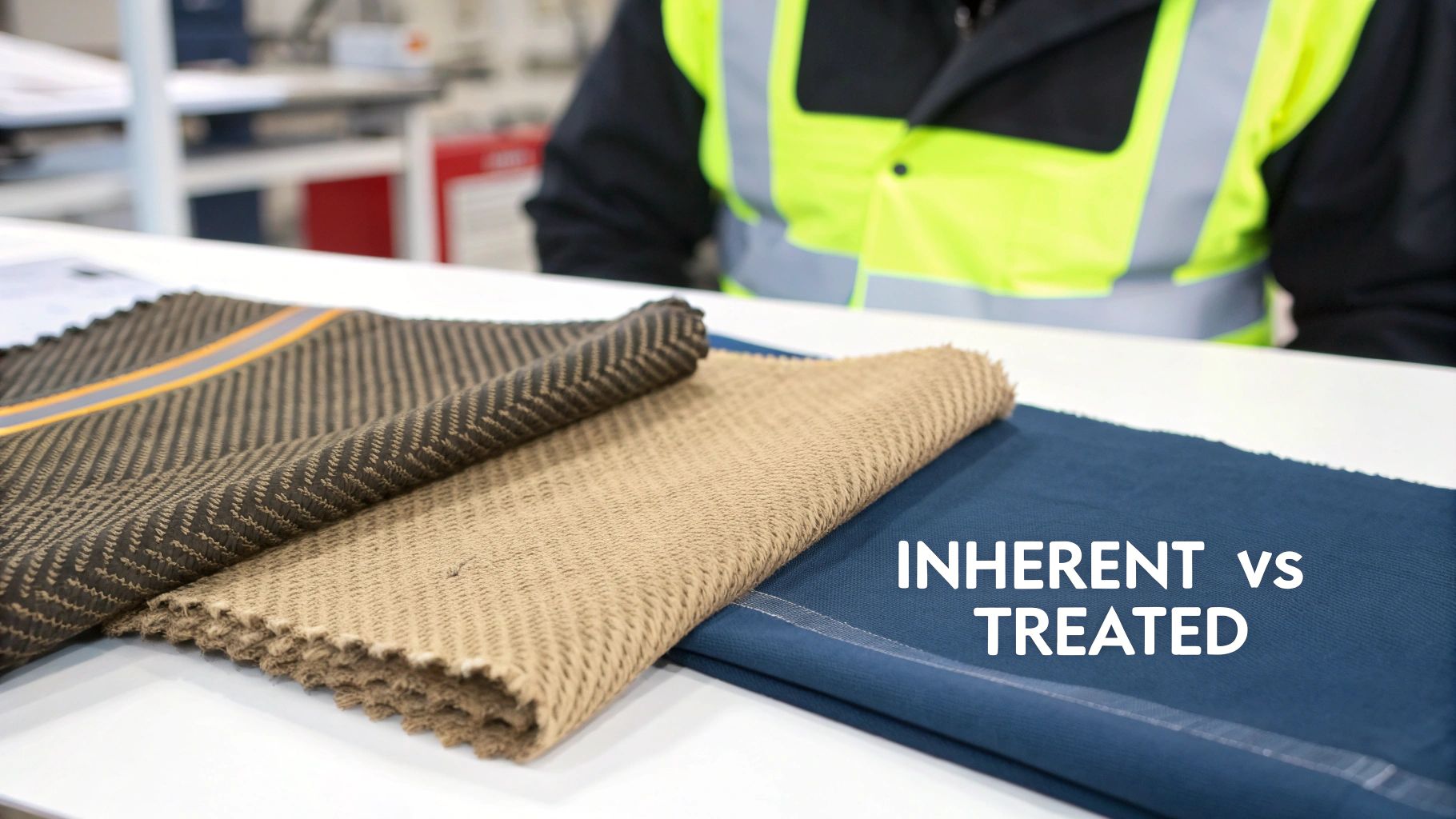
When you dig into FR technology, you’ll find two main categories: inherent and treated fabrics. The easiest way to think about it is like this: an inherently FR fabric is like a brick—its fire resistance is a natural, permanent part of its structure. A treated FR fabric is more like wood painted with a fire-retardant coating; the protection is a finish that's been added on top.
Let's break that down a bit more:
- Inherent FR Fabrics: These are materials like aramids and modacrylics where flame resistance is literally built into their chemical DNA. This protection can't be washed out or worn away, giving you durable, lifelong performance you can count on.
- Treated FR Fabrics: This is usually cotton or a cotton-blend fabric that's been put through a chemical process to give it flame-retardant properties. They're definitely effective and often more budget-friendly, but the treatment's strength can fade over time with repeated washing.
This is a critical distinction for both safety managers and the workers on the ground. As the demand for reliable PPE grows, so does the market. North America currently holds a 33.3% share of the global flame retardant apparel market, a sector projected to hit USD 13.0 billion worldwide.
Understanding this fundamental difference is the key to reading safety labels and making smart choices for your crew. If you want to dive deeper into the specific materials and how they're used, check out our ultimate guide to flame resistant (FR) clothing. Your safety depends on knowing exactly what your gear can—and can't—do.
Decoding the Safety Standards on the Label
Flipping over the tag on a flame-resistant jacket can feel like you're trying to crack a secret code. You'll see a jumble of letters and numbers—NFPA 2112, ASTM F1506, ATPV—and each one represents a huge amount of testing and engineering. Getting a handle on this alphabet soup isn't just a good idea; it’s the only way to be certain you’re matching the right gear to the right hazard.
These standards aren't just suggestions. They are serious benchmarks developed by safety organizations to guarantee a jacket performs exactly as expected when things go sideways. Think of them as a universal language for safety. Once you learn to speak it, you can confidently size up any garment's real-world protective power.
NFPA 2112: The Flash Fire Benchmark
If you work in oil and gas, chemical processing, or manufacturing, the most critical standard to look for is NFPA 2112. This is the go-to North American benchmark for protection against short-duration thermal exposures from fire—what we all know as a flash fire.
A flash fire is a terrifyingly fast-moving wall of flame. When a jacket is NFPA 2112 certified, it means it has survived a battery of tough tests to prove it won't make a bad situation worse.
The testing is no joke and includes a full-garment test on a thermally sensored manikin. To get the stamp of approval, the garment has to prove it will:
- Not melt or drip: Everyday materials like polyester or nylon can melt onto a worker’s skin, causing devastating secondary burns. FR gear can't do that.
- Not ignite and keep burning: The fabric must self-extinguish almost instantly once the flame source is gone.
- Limit predicted body burn: The standard sets a maximum of 50% total body burn during a simulated three-second flash fire.
A jacket that meets NFPA 2112 is your assurance that it will act as a protective barrier. It gives you the precious seconds you need to escape a flash fire without your own clothing becoming part of the problem.
NFPA 70E and ASTM F1506 for Arc Flash Hazards
While flash fires are a major concern, electrical workers face a different kind of monster: the arc flash. This is a violent electrical explosion that unleashes an incredible amount of thermal energy. For these pros, the key standards are NFPA 70E and ASTM F1506.
NFPA 70E is the Standard for Electrical Safety in the Workplace. It’s the rulebook, outlining safe work practices to protect against electrical hazards. It tells you what to do, including the requirement to wear the right Arc-Rated (AR) personal protective equipment.
ASTM F1506, on the other hand, is the performance specification. It tells you how the fabric must perform to be considered protective. For a flame-resistant jacket to be compliant for electrical work, its fabric has to be tested and certified to this standard. The most important number to come out of this testing is the Arc Rating.
Understanding Arc Ratings
The Arc Rating is the single most important piece of information for anyone working around live electricity. It’s a number that tells you exactly how much thermal energy a fabric can block before the person wearing it would likely get a second-degree burn. This rating is measured in calories per square centimetre (cal/cm²).
You’ll usually see this value listed in one of two ways:
- Arc Thermal Performance Value (ATPV): This is the most common rating. It tells you the maximum incident energy a fabric can handle before there’s a 50% chance of the wearer getting a second-degree burn.
- Energy Breakopen Threshold (EBT): This rating is used when the fabric breaks open before a burn is predicted to occur. It's considered just as protective as an ATPV of the same value.
Your company’s hazard risk assessment will tell you the potential incident energy you could be exposed to. Your job is to pick an FR jacket with an Arc Rating that meets or exceeds that number. For a wide selection of gear that meets these strict requirements, you can explore our full collection of OSHA-rated AR/FR clothing.
To help you keep these straight, here’s a quick-glance table breaking down the most common standards you'll see.
Key Flame Resistant Jacket Standards at a Glance
| Standard | Primary Hazard Protection | Key Industries | What It Means for You |
|---|---|---|---|
| NFPA 2112 | Flash Fire | Oil & Gas, Petrochemical, Manufacturing | Your gear won't melt, drip, or keep burning, providing crucial escape time. |
| NFPA 70E | Arc Flash | Utilities, Electrical Contractors, Maintenance | This is the safety rulebook requiring you to wear arc-rated PPE. |
| ASTM F1506 | Arc Flash | Utilities, Electrical Contractors, Maintenance | This is the fabric test method that generates the all-important Arc Rating (cal/cm²). |
| CAN/CGSB 155.20 | Flash Fire | Canadian Oil & Gas | The Canadian equivalent of NFPA 2112, ensuring flash fire protection up north. |
This table is a great starting point, but always double-check your site-specific safety requirements to ensure you're covered.
Canadian Standards: CAN/CGSB
Here in Canada, you’ll also run into standards from the Canadian General Standards Board (CGSB). The main one for flame resistance is CAN/CGSB 155.20, Workwear for Protection Against Hydrocarbon Flash Fire. This standard is very similar to NFPA 2112 and is the must-have requirement for Canadian oil and gas workers.
By understanding these core standards, you can turn a confusing label into a clear, practical safety checklist. It’s how you make sure every jacket you choose provides the exact protection you need to get the job done and get home safe.
Choosing Your Armour: Fabric and Construction
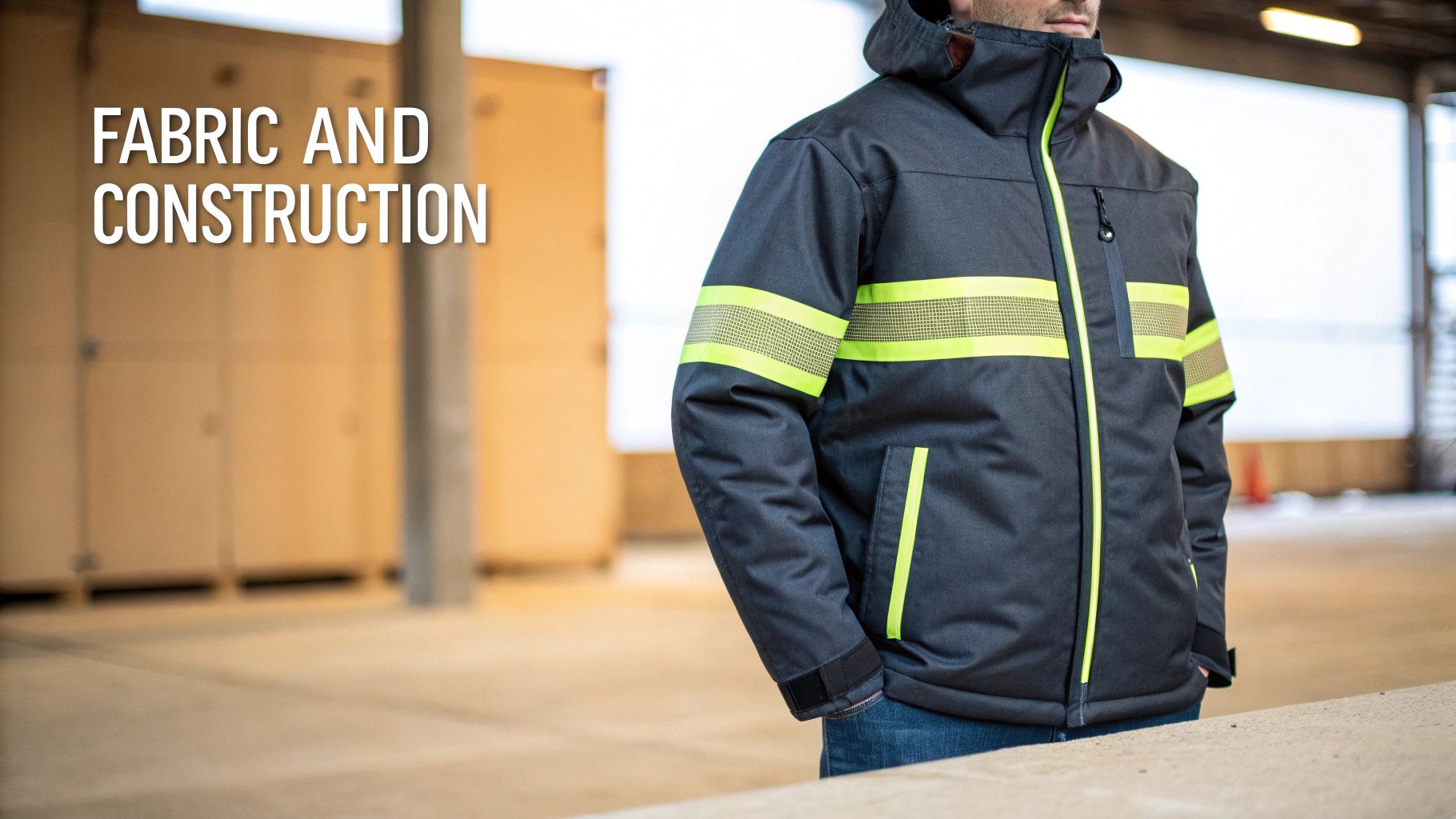
Beyond the safety ratings stamped on the label, the actual material of a flame-resistant jacket is what truly defines its performance, comfort, and lifespan. The fabric choice is the core of your protection. It influences everything from how the jacket feels during a long shift to how it holds up after dozens of washes.
Making the right call means understanding the fundamental difference between the two main types of FR fabrics. Think of it this way: an inherently flame-resistant fabric is like a brick. Its resistance to fire is an inseparable part of its very structure. On the other hand, a treated FR fabric is more like a piece of wood coated with fire-retardant paint. The protection is an added layer—effective, but different in nature.
This distinction is crucial. The U.S. flame retardant apparel market, currently valued at about USD 1.7 billion, is driven by industrial sectors that demand reliable, long-term performance. With industrial manufacturing and contractors making up roughly 78% of this market, understanding fabric longevity and protection is a top priority. You can discover more insights about the growing demand for FR apparel on Factmr.com.
Inherent vs. Treated FR Fabrics: A Closer Look
Choosing between inherent and treated fabrics isn't about which one is "better" overall, but which is better for your specific job demands, budget, and maintenance routine. Each comes with a distinct set of pros and cons that directly impact your daily experience on the job site.
Let's break them down side-by-side:
| Feature | Inherent FR Fabrics (e.g., Modacrylic, Aramid) | Treated FR Fabrics (e.g., FR Cotton) |
|---|---|---|
| Protection Durability | Permanent; protection is part of the fibre and cannot wash or wear out. | Can degrade over many washes; improper laundering can reduce effectiveness. |
| Initial Cost | Generally a higher upfront investment. | More budget-friendly, making it a common choice for large crews. |
| Comfort & Feel | Can be lighter and more breathable, with better moisture management. | Often feels softer, like traditional cotton workwear, which many find comfortable. |
| Longevity | Typically offers a longer service life, balancing the higher initial cost. | May need to be replaced more frequently, especially under harsh conditions. |
Ultimately, inherent fabrics offer "set it and forget it" peace of mind regarding protection, while treated fabrics provide a cost-effective and comfortable solution that requires diligent care.
Construction Details That Elevate Safety
A truly great flame-resistant jacket is more than just its fabric. The way it's put together—the seams, zippers, and closures—plays a vital role in its overall safety and functionality. These construction details are often the difference between a good jacket and one that you can trust completely.
When examining a jacket, pay close attention to these critical components:
- Non-Conductive Zippers: For electricians and utility workers, this is non-negotiable. Zippers made from brass or other non-conductive materials prevent the transfer of electrical current, a crucial feature in an arc flash environment.
- Reinforced Seams: Look for triple-stitched main seams. This robust construction prevents the jacket from splitting or coming apart under stress, ensuring the protective barrier remains intact when you need it most.
- Storm Flaps: A flap of FR fabric covering the front zipper provides an extra layer of defence. It blocks heat, sparks, and debris from penetrating the most vulnerable closure point on the jacket.
- FR-Compliant Components: Every single part of the jacket, from the thread used for stitching to the pocket linings and wrist closures, must be flame-resistant. A single non-compliant component can compromise the entire garment's safety.
These seemingly small details are engineered with purpose. They work together to create a complete protective system, ensuring there are no weak points in your last line of defence against thermal hazards.
This level of detail extends to other FR garments as well. For example, understanding the specific features of FR bib overalls can help you build a complete and effective protective layering system for full-body coverage.
Matching the Jacket to the Job Hazard
Choosing the right flame-resistant jacket isn't about grabbing the one with the highest rating off the shelf. It’s about making a smart match between your gear's capabilities and the very specific dangers you face on your worksite. The jacket a lineman needs is worlds apart from what's required on a drilling rig.
Think of it like picking the right tool for the job—you wouldn't use a hammer to turn a screw. In the same way, matching your FR jacket to the primary hazard you’ll encounter is the single most important step you can take to stay safe. This approach gets you beyond abstract numbers and connects the technical specs to what actually happens out in the field, ensuring you're protected when it counts.
Oil and Gas Protection from Flash Fires
If you're in the oil and gas industry, your biggest worry is a flash fire. These are sudden, incredibly intense blazes that happen when flammable vapours in the air ignite. For this, the gold standard is NFPA 2112. A jacket with this certification is your guarantee that it won’t melt, drip, or keep burning after that initial flash, giving you precious seconds to get to safety.
When you're picking out a jacket for the patch, here’s what to look for:
- NFPA 2112 Certification: This is non-negotiable. It should be right there on the label.
- Durable Outer Shell: You need fabrics that can take a beating on a rig or in a refinery.
- Full Coverage: Little details matter. Look for storm flaps over zippers and snug cuffs that create a solid barrier against heat and flame.
Electrical and Utility Work with Arc Flash Risks
For electricians and utility workers, the threat is different but just as dangerous: an arc flash. This is a violent electrical explosion that unleashes a wave of heat energy, measured in calories per square centimetre (cal/cm²). Your mission is to find a jacket with an Arc Rating that meets or, ideally, exceeds the potential energy calculated for your worksite.
Your jacket’s Arc Rating is its defensive shield. It has to be strong enough to absorb the thermal energy of a potential arc flash to prevent devastating burns. Picking a jacket with a rating that’s too low is a critical safety failure.
Key things for this kind of work include:
- Arc Rating (ATPV or EBT): Make sure the rating in cal/cm² lines up with your Hazard Risk Category (HRC/CAT).
- Non-Conductive Components: Zippers, buttons, and snaps must be made from materials that won't conduct electricity.
- ASTM F1506 Compliance: This standard is your confirmation that the fabric has been properly tested and rated for arc flash protection.
Construction Sites Demanding Durability and Visibility
On a busy construction site, you're often dealing with a mix of hazards. While a specific thermal risk might not be a daily occurrence, you need gear that's both tough as nails and highly visible. A standard work jacket just won't cut it if there's any chance of sparks from welding, grinding, or cutting.
A multi-purpose flame resistant jacket is often the best bet here, balancing FR properties with other must-have features. For workers who need to be seen by heavy equipment operators, visibility is just as important as flame resistance. This is where options like custom hi-vis vests can complement your FR gear, but the jacket itself should also meet CSA Z96 or ANSI 107 standards for high visibility.
Layering Strategies for Cold Climates
Working through a Canadian winter adds a whole new challenge. You need to stay warm without creating a new safety hazard. The golden rule here is that every single layer you wear must be flame-resistant. Throwing a standard polyester hoodie under your FR jacket is a huge mistake—it can melt to your skin in an incident, completely defeating the purpose of your protective outer layer.
Build your system from the inside out. Start with an FR-rated base layer to wick moisture away from your skin. Add an FR mid-layer, like a fleece or hoodie, for warmth. Your final piece is a weatherproof outer jacket built for the elements. To see what's out there for insulated outerwear, from parkas to bombers, check out our complete collection of FR parkas and bomber jackets. A smart layering system like this will keep you warm, dry, and fully protected, no matter how far the temperature drops.
Essential Features Beyond Flame Resistance
A flame-resistant jacket's main job is to protect you from thermal hazards, but that protection is useless if the jacket is too awkward or impractical to wear all day. Real safety comes from gear that workers actually keep on for their entire shift. This means things like function, comfort, and suitability for the weather are just as important as the FR rating itself.
Let's be honest, a jacket left in the truck because it’s too hot, restrictive, or doesn't have the right pockets offers zero protection. That's why modern FR jackets are designed as complete work tools, blending features that boost both your safety and your ability to get the job done.
High Visibility For Increased Safety
If you're working anywhere near moving vehicles, heavy machinery, or in low-light conditions like dawn or dusk, being seen is your first line of defence. High-visibility flame-resistant jackets are built for this, combining fluorescent background fabrics with retroreflective striping.
In Canada, these jackets must meet the CSA Z96 standard (the U.S. equivalent is ANSI/ISEA 107). These standards classify gear based on how much hi-vis material is used, making sure you stand out from a safe distance. Combining FR protection with high visibility in one garment tackles multiple job site hazards at once.
A classic mistake we see is people throwing a non-FR hi-vis vest over their FR jacket. In a flash fire or arc flash, that vest can ignite or melt onto the FR gear, creating a secondary hazard that can cause serious injury. A jacket that has both protections built-in is always the safer way to go.
This diagram helps show how different worksite hazards call for different types of protective jackets.
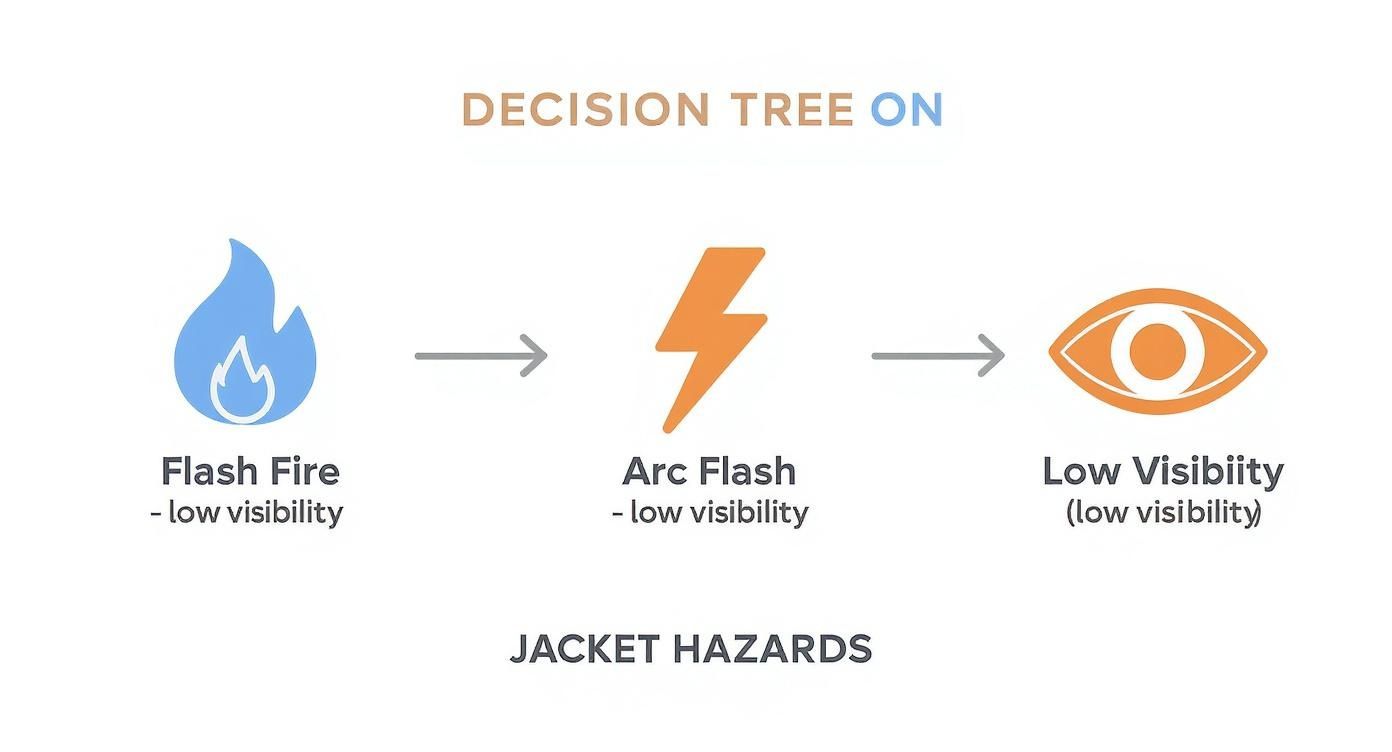
The takeaway here is that hazards rarely come one at a time. A worker can easily face thermal risks and low visibility in the same shift, which is why multi-functional gear is so critical. For more on the different types of reflective materials, check out our guide on reflective striping.
Weatherproofing Without Compromise
Working outdoors means you're always up against the elements, and staying dry is a matter of safety, not just comfort. Manufacturers have come up with clever ways to make FR outerwear that's waterproof and windproof without weakening its protective qualities.
They do this with multi-layer fabric systems. A waterproof, breathable membrane gets sandwiched between the tough FR outer shell and a comfortable inner liner. Every seam is then carefully sealed with FR-compliant tape to block any moisture from getting in. This construction keeps you dry from rain and snow while letting sweat escape, preventing that dangerous clammy feeling from moisture buildup inside your jacket.
Practical Features For Everyday Use
It's often the small details on a flame-resistant jacket that make the biggest difference in how useful it is day-to-day. Smart design choices can turn a piece of mandatory PPE into an essential part of your toolkit.
Here are some key functional features to look for:
- Strategically Placed Pockets: Look for pockets designed for specific tools, radios, or gas monitors that keep your essential gear handy and secure.
- Breathable Vents: Zippered vents, usually under the arms, are a game-changer for regulating your body temperature during hard work, cutting down the risk of heat stress.
- Detachable Hoods: A hood you can take off adds versatility. You get protection when you need it, but it's not in the way when you don't.
- Adjustable Cuffs: Hook-and-loop closures at the wrists let you cinch the sleeves for a snug fit. This keeps out drafts and stops sparks or debris from getting inside.
These features prove that a truly great FR jacket is a balanced system. It gives you full protection from the hazards you know are out there, while also delivering the practical utility you need to do your job well and comfortably, no matter what the day throws at you.
How to Care for Your FR Gear
A flame-resistant jacket is a serious investment in your safety, but its protective power is only as good as its condition. Proper care isn't just about knocking the dirt off; it’s a critical maintenance routine that preserves the integrity of the FR fabric. Getting it wrong in the laundry room can strip away those life-saving qualities or, even worse, add flammable residues that create a brand-new hazard.
Think of it this way: the FR properties of your jacket are a built-in safety system. Just like any other crucial piece of equipment on the job site, it needs regular checks and the right kind of maintenance to function correctly when you need it most. Tossing it in the wash with the wrong products is like putting sugar in a gas tank—it can cause serious, often invisible, damage.
The entire market for protective apparel is advancing, with the U.S. firefighting clothing market alone projected to reach USD 41,071 million. This growth is fuelled by innovative textiles and a greater emphasis on training programs that include correct maintenance procedures for gear like flame-resistant jackets. You can learn more about these market trends for firefighting clothing on marksparksolutions.com.
The Right Way to Wash Your FR Jacket
Laundering your FR jacket correctly is pretty straightforward once you know the rules. Following these steps helps make sure the fabric's protective qualities aren't compromised, giving you one less thing to worry about on the job site.
- Read the Label First: This is non-negotiable. Always check the manufacturer's specific care instructions. That little tag on your jacket is your ultimate guide.
- Wash Separately: Keep your FR garments separate from your regular clothes. This prevents any transfer of contaminants or non-FR fibres that could compromise safety.
- Use Warm Water: Wash in warm water (around 60°C or 140°F) unless the label says otherwise. This temperature is the sweet spot—effective at removing grime without damaging the FR fibres.
- Choose the Right Detergent: Stick with a mild household laundry detergent. Steer clear of chlorine bleach or hydrogen peroxide, as these harsh chemicals can break down and degrade the FR fabric over time.
Crucial Tip: Never, ever use fabric softeners or dryer sheets. These products work by coating the fabric with a thin, waxy layer. On FR gear, that residue is flammable and can act as a fuel source in a fire, completely defeating the purpose of your jacket.
Inspection Is Your First Line of Defence
Before and after every wash, give your FR jacket a thorough once-over. This quick check can literally be the difference between staying safe and facing a serious injury. You’re looking for any signs of wear and tear that could create a weak point in your protection.
Make this simple routine a habit:
- Check for Rips and Tears: Small holes can often be patched with FR-compliant materials, but large, unrepairable tears mean the jacket must be retired from service.
- Look for Contamination: Check for deep-set stains from flammable substances like oil or grease. If they can't be washed out completely, the jacket is no longer safe to wear.
- Inspect Seams and Closures: Make sure all seams are intact and that zippers, snaps, and buttons function correctly. A broken zipper can prevent you from getting a complete protective seal.
If your jacket shows signs of thinning fabric, has frayed cuffs, or displays any of the issues above, it’s time to take it out of service. Proper care extends its life, but knowing when to retire it is just as important.
Still Have Questions? Here Are Some Common Ones.
Even after you've got all the specs and standards down, a few practical questions always pop up when it's time to put your safety program into practice. Here are the straight-up answers to some of the most common things we get asked about flame resistant jackets.
Can I Just Wear My Normal Hoodie Under My FR Jacket?
Absolutely not. This is a critical mistake that can have devastating consequences.
The only things you should ever wear under your FR jacket are garments made from non-melting natural fibres (think 100% cotton or wool) or other certified FR clothing. Your everyday polyester hoodie, athletic shirt, or fleece pullover might feel comfortable, but in a flash fire or arc flash, they can melt directly onto your skin. This can cause horrific burns, even if your FR jacket does its job perfectly. Always, always check that your base and mid-layers are safe for your specific hazards.
How Do I Know When It’s Time to Retire My FR Jacket?
You have to get a jacket out of service the moment its protective barrier is compromised. It’s not about looking a little worn; it’s about staying safe. During your regular gear checks, keep a sharp eye out for these red flags:
- Holes or Tears: Any rip or puncture that you can't properly patch with FR-compliant materials is a deal-breaker.
- Flammable Stains: If you've got oil, grease, or other flammable gunk soaked into the fabric that won't come out in the wash, the jacket is a liability.
- Serious Wear and Tear: Look for fabric that's worn thin, cuffs or collars that are frayed to bits, or any threadbare spots. These are all weak points.
- Busted Zippers or Snaps: If the closures don't work properly, you can't get a secure fit, leaving you exposed.
Your company’s safety policy and the manufacturer's guidelines should always be your final authority, but if a jacket looks questionable, don't risk it.
When a flame resistant jacket is damaged, it’s not just a piece of clothing anymore—it’s a hazard. Retiring a worn-out garment isn't about looks; it's a non-negotiable part of keeping yourself safe on the job. A jacket that’s past its prime is a risk you can't afford to take.
At Refinery Work Wear Canada, we live and breathe this stuff. We provide the certified, tough, and functional flame resistant jackets your crew needs to stay protected. Check out our massive collection of FR workwear and get the right gear for your specific job hazards today. Shop now at canada.refineryworkwear.com.