

FR bib overalls are far more than just another piece of heavy-duty workwear. Think of them as a critical piece of Personal Protective Equipment (PPE), specifically engineered to self-extinguish the moment they're hit with flames or extreme heat. This gear is your first and last line of defense against life-threatening thermal hazards like flash fires and arc flashes—dangers that are all too common in high-risk industries.
Why FR Bib Overalls Are Your First Line of Defense
Don't mistake FR bib overalls for a simple uniform. They are essential armour for the modern industrial worker. The "FR" stands for Flame Resistant, but the real meaning goes much deeper. These garments are meticulously engineered to save lives in environments where a split second is the only thing standing between a close call and a catastrophic injury.
A great way to think about it is like a race car driver's suit. It's not just there for show; it’s built to protect against intense heat and fire if a crash happens. FR bib overalls serve the exact same purpose for industrial professionals. Their fabrics are scientifically designed not to melt or drip when exposed to intense heat, preventing severe burns and giving you those precious few seconds you need to escape a dangerous situation.
More Than Just Clothing, It's PPE
This distinction is absolutely crucial. Regular clothing, especially synthetics like polyester, can ignite and melt directly onto your skin, making a bad injury infinitely worse. FR bibs do the opposite. They form a protective char barrier that insulates you from the heat source. This makes them a non-negotiable part of safety protocols in sectors like:
- Oil and Gas: Protecting workers from potential flash fires on drilling rigs and in refineries.
- Electrical Utilities: Shielding lineworkers and electricians from the extreme temperatures of an arc flash.
- Welding and Metalworking: Defending against sparks, molten metal splatter, and high radiant heat.
Understanding why these overalls are essential is part of a bigger commitment to on-the-job safety, which includes comprehensive workplace safety procedures and legal expectations.
By choosing to wear FR bib overalls, you aren't just following a rule; you're making an active decision to protect yourself. The garment’s protective qualities are always on, acting as a constant safeguard against unexpected thermal events.
A Foundation for Comprehensive Safety
At the end of the day, selecting the right FR bibs is one of the most important safety decisions you can make. It has a direct impact on your well-being on any job site where thermal hazards are present. This guide will walk you through the technologies and standards behind this life-saving equipment, so you can make a truly informed choice.
To get a better handle on the core concepts of this gear, you can explore our ultimate guide to flame-resistant (FR) clothing.
Decoding Canadian FR Standards and Safety Ratings
Trying to make sense of the alphabet soup of safety standards on a garment tag can feel like a real chore. But those acronyms—NFPA, CSA, ATPV—are more than just letters. They’re your guarantee that the FR bib overalls you’re about to put on are actually up to the job of protecting you. When you understand these ratings, you move beyond just checking a compliance box and start making truly informed decisions for your own safety.
Think of these standards as a universal language for protection. A nutritional label tells you what’s in your food, and in the same way, FR ratings tell you exactly what kind of hazard your gear is built to handle. This is especially important in Canada, where specific standards are in place for different workplace risks, from flash fires on an oil patch to arc flashes on a utility line.
Key Canadian Standards You Must Know
In Canada, industrial work is dominated by two main types of thermal hazards: flash fires and arc flashes. It makes sense, then, that the standards are designed to tackle these specific threats. The FR bib overalls you choose must be certified for the primary risk you face every day.
-
NFPA 2112: This is the benchmark standard for protection against flash fires. It lays out the non-negotiable requirements for design, performance, and certification of FR garments. To earn this certification, the gear has to pass some intense challenges, including a 3-second thermal mannequin test. This ensures it won’t melt, drip, or keep burning, which dramatically reduces the severity of potential burn injuries.
-
NFPA 70E / CSA Z462: These are the critical standards for electrical safety and arc flash protection. While NFPA 2112 is all about fire, these standards deal with the massive, violent energy released during an electrical arc fault. CSA Z462 is the Canadian counterpart to the American NFPA 70E, and it details the safety practices and PPE needed to shield workers from electrical dangers.
A simple way to picture it is that your FR overalls act as a critical piece of personal protective equipment (PPE), creating a necessary barrier between you and the hazard.
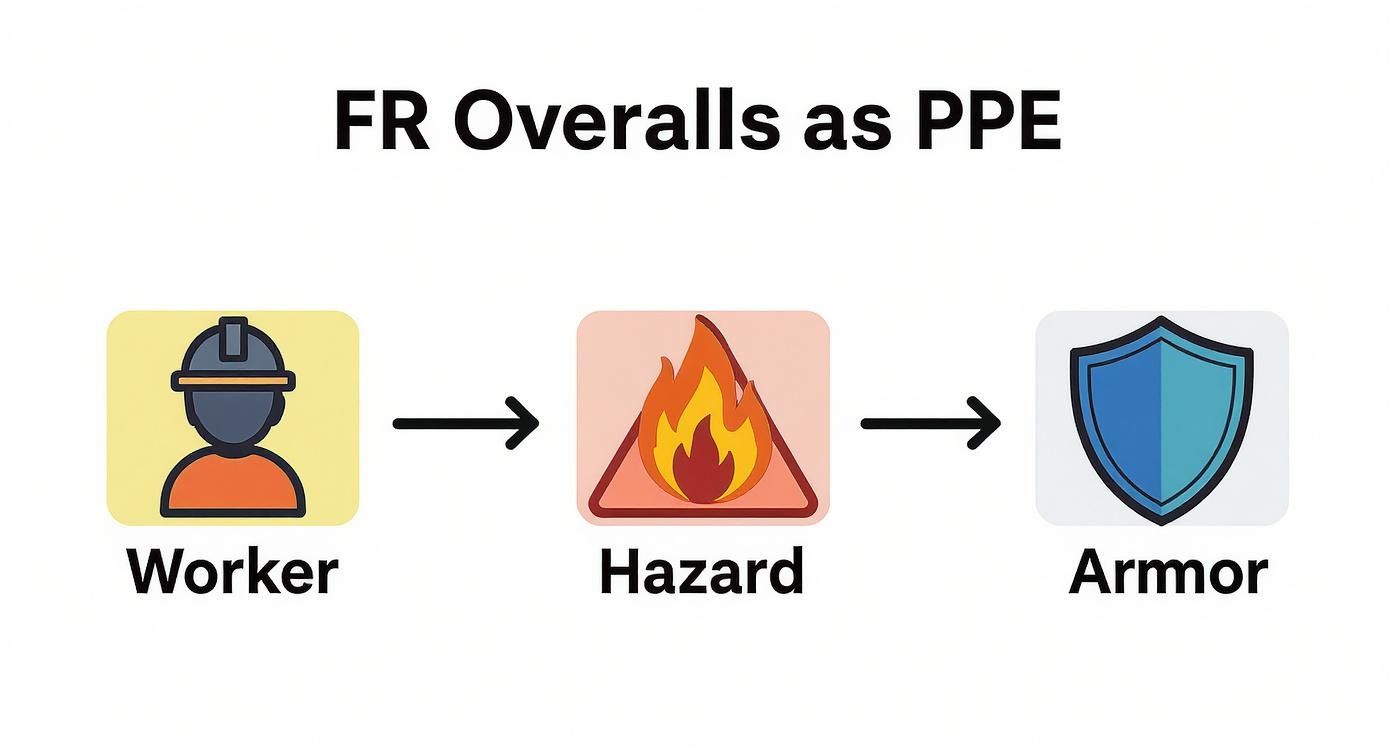
The right "armour" is what intercepts the danger before it can ever reach you. It’s that straightforward.
To make these standards a bit easier to digest, here’s a quick breakdown of what they cover and where they’re most often required.
Canadian FR Standards at a Glance
| Standard (e.g., NFPA 2112) | Primary Hazard Protection | Common Industries |
|---|---|---|
| NFPA 2112 | Flash Fire | Oil & Gas, Petrochemical, Manufacturing |
| CSA Z462 / NFPA 70E | Arc Flash, Electrical Shock | Utilities, Electrical Contractors, Maintenance |
This table helps clarify which standard applies to your job, ensuring you select gear that offers the right kind of protection for the specific hazards you face.
Understanding Arc Ratings and ATPV
If you work with or near energized electrical equipment, there's one number on your gear's label that matters more than any other: the Arc Rating.
The Arc Rating is simply a measure of how much thermal energy a fabric can block before the person wearing it would likely suffer a second-degree burn. It's measured in calories per square centimetre (cal/cm²).
Think of an Arc Rating like the SPF on sunscreen. A higher SPF gives you more protection from the sun. In the same way, a higher Arc Rating provides more protection from the intense heat of an arc flash.
The most common value you'll see is the Arc Thermal Performance Value (ATPV). This number tells you the maximum incident energy the fabric can handle. Your employer is responsible for conducting a hazard assessment to figure out the minimum ATPV your gear needs for the tasks you perform. Choosing overalls that meet or—even better—exceed this value is absolutely non-negotiable for your safety.
You can browse a wide selection of compliant apparel in our collection of OSHA-rated AR/FR clothing.
Knowing these standards and ratings changes the game. You're no longer just a passive user of safety gear; you become an active participant in your own safety program. One look at the tag on a pair of FR bibs, and you can instantly decode its capabilities and know for sure that it's the right armour for your job.
The Anatomy of High-Performance FR Fabric and Construction
What’s the real difference between a top-tier pair of FR bib overalls and a standard set? It all comes down to what’s going on under the surface—in the fabric itself and the fine points of its construction. Think of it like looking under the hood of a high-performance engine; it’s not just about the shiny exterior, but the engineering that guarantees it will perform when you need it most.
The material is your first line of defence. The choice of fabric directly dictates how durable and comfortable the gear will be, and more importantly, how it will react in a thermal event. It’s a careful balance of material science and real-world application, with different fabrics offering unique pros and cons for various jobsites.

The Core Materials of FR Protection
Let’s be clear: not all FR fabrics are created equal. The biggest distinction comes down to whether the material is inherently flame resistant or has been treated to become flame resistant.
-
Treated Fabrics: These are usually cotton or cotton-blend materials that have been put through a chemical process to give them their FR properties. They tend to be more affordable and quite breathable, which makes them a solid choice for many. The catch? The FR protection can weaken over time if you don’t launder them correctly, especially if you use bleach or fabric softeners.
-
Inherent Fabrics: We’re talking about materials like aramids (think Nomex®) and modacrylics. Their flame resistance is built right into their chemical structure. This means the protection is a permanent part of the fibre—it cannot be washed out or worn away. While they often cost a bit more upfront, they deliver unmatched long-term reliability and are often lighter for the same level of protection.
Inherent FR fabric is like having safety built into the garment’s DNA. Treated fabric is like applying a highly durable, protective coating. Both are effective, but inherent fabrics offer a permanent, worry-free solution for the life of the garment.
For anyone working in extreme conditions, the reliability of inherent fabrics is a game-changer. Take our popular Nomex® Essential Insulated Bib Pants—they use this advanced material to provide permanent FR protection that stands up to the toughest jobs.
Beyond the Fabric: Construction That Counts
While the fabric is critical, how the bib overalls are pieced together is just as important. The best FR fabric in the world won’t do you any good if the seams blow out or the zipper melts. These construction details are the unsung heroes of your safety gear.
These are the features that stop small failures from becoming catastrophic ones in an emergency. They are the difference between gear that actually works and gear that just looks the part.
-
FR-Rated Components: Every single part of the garment has to be flame resistant. That includes FR zippers (often made of brass), FR threads for all the stitching, and even any patches or logos. A standard polyester thread could melt in high heat, causing the entire garment to fall apart when you need it most.
-
Non-Conductive Hardware: For electricians and utility workers, this is an absolute must. All snaps, buckles, or buttons have to be made from non-conductive materials to ensure they don’t become an electrical hazard.
-
Reinforced Seams and Stress Points: Quality FR bibs will have triple-stitched main seams and bar-tacking at key stress points like pocket corners and belt loops. This ensures the garment can handle the physical abuse of industrial work without its structure being compromised.
Finding Your Perfect Fit for All-Day Safety and Comfort
When it comes to your FR bib overalls, getting the fit wrong is a lot more than just a minor inconvenience—it's a serious safety risk. Think of it like a seatbelt in your truck. Too loose, and it won't do its job in a collision. Too tight, and it's not just uncomfortable, it could fail under stress. That same logic applies directly to your protective gear.
Nailing the right size is the absolute first step in making sure your gear can protect you. A proper fit is the bedrock of both safety and comfort, freeing you up to focus on the task at hand without being distracted or held back.

Why the Right Fit Is a Safety Mandate
Let's get into the specifics of a bad fit and the dangers each extreme poses on a job site. When your well-being is on the line, neither of these scenarios is ever okay.
Too Loose: Overalls that are baggy are a major snag hazard. It’s far too easy for loose fabric to get caught in rotating machinery, on a ladder rung, or even on parts of a vehicle. That creates a terrifying risk of being pulled into equipment.
Too Tight: A snug fit might look streamlined, but it’s just as dangerous. Restrictive clothing limits your range of motion, making it tougher to bend, crouch, or react when you need to. Even more critically, it squeezes out the vital layer of air between the fabric and your skin. This protective air gap is a crucial insulator against thermal energy. Without it, heat from a flash fire or arc flash can transfer directly to your body much, much faster.
How to Measure for a Perfect Fit
To get this right, you need accurate numbers. Don't just guess or grab the same size as your weekend jeans. You absolutely have to measure over the clothes you’ll typically wear underneath your bibs, especially if you’re working in colder climates and need to layer up.
- Waist: Run a tape measure around your natural waistline. Keep it comfortably loose, not cinched tight.
- Inseam: Measure from your crotch straight down to the bottom of your ankle. For the most accurate number, it really helps to have someone give you a hand with this.
Remember to account for your base layers. If you know you'll be wearing thermal long johns underneath, your measurements will be different than if you're just in a t-shirt. Thinking about this from the start will save you from buying gear that ends up being too tight to work in.
Functionality That Enhances Safety
Beyond just the size, the functional design of your FR bib overalls plays a massive part in your daily safety and efficiency. Overalls have always been about blending pure utility with protection. Labourers back in the early 20th century, whether on the farm or in the factory, relied on them for their tough build and handy pockets—a design legacy that’s still with us today. You can learn more about the history of this iconic workwear on witness2fashion.wordpress.com.
Modern FR bibs just build on that solid foundation with features designed for specific jobs. Look for things like reinforced knees that can take a beating, pass-through pockets that let you get to your pants pockets underneath, and tool loops placed right where you need them. These aren't just little conveniences; they keep your hands free and your tools secure, cutting down the risk of dropped objects and making your whole workflow smoother.
Proper Care to Maximize the Lifespan of Your FR Gear
Your FR bib overalls are a serious investment in your safety, but their protective qualities aren’t indestructible. Like any high-performance tool in your kit, they need proper maintenance to do their job right. A good care routine is the only way to maintain the integrity of the flame-resistant fabric and ensure it performs when you need it most.
Think of it like this: you wouldn't skip an oil change on your truck and expect the engine to run forever. The same logic applies to your FR gear. Following the care instructions isn’t just about keeping them clean; it’s about protecting your investment and, more importantly, yourself. Taking shortcuts can actively break down the safety features you rely on.
The Do's and Don'ts of Laundering FR Bib Overalls
Washing FR bibs isn't as simple as tossing them in with your jeans. Some of the most common laundry products you have at home can coat the specialized fibres, completely neutralizing their flame-resistant properties. The scary part? This can happen without you even noticing a change in the look or feel of the garment.
Here’s a simple, effective routine to follow:
- Inspect Before Washing: Give them a quick once-over. Look for rips, tears, or deep stains from flammable stuff like oil or grease. If you can't wash out a flammable contaminant, the garment might be done for.
- Use the Right Detergent: Stick with a standard home laundry detergent. You absolutely want to avoid anything containing fabric softeners, bleach, or hydrogen peroxide, as these will damage the FR fabric.
- Wash Separately: Keep your FR gear separate from your regular clothes to prevent any cross-contamination. Turning them inside out before washing also helps reduce wear on the outer shell and reflective striping.
- Check Water Temperature: Use warm water, just as the garment’s care tag specifies. This is usually the sweet spot for getting rid of grime without being too harsh on the fabric.
- Drying Instructions: You can tumble dry on a low heat setting or simply hang them to dry. High heat can cause the bibs to shrink and puts unnecessary stress on the fibres.
A dangerous myth is that fabric softener makes workwear more comfortable. On FR gear, it leaves a flammable residue that can ignite, completely compromising your protection. Never use fabric softener on your FR bib overalls.
Knowing When to Retire Your Gear
Even with perfect care, all FR workwear has a limited lifespan. It’s a consumable piece of safety equipment that eventually wears out. Being able to spot when a garment is no longer safe is a critical skill for anyone working in a hazardous environment.
You must retire your FR bib overalls immediately if you see any of these red flags:
- Irreparable Damage: Holes, rips, or tears that can't be properly patched with FR-rated materials.
- Worn-Out Fabric: Any areas that have become threadbare, thin, or feel flimsy and weak.
- Permanent Contamination: Stains from flammable materials like grease, solvents, or oils that just won’t wash out.
- Damaged Components: Broken zippers, melted snaps, or reflective striping that is peeling or worn away.
If you need info on adding or fixing up high-visibility elements, check out our guide on professional reflective striping services. For a deeper dive into maintaining specialized workwear, The Essential Guide to Caring for High-Performance Fabrics is another fantastic resource.
Choosing the Right FR Bib Overalls for Your Industry
Picking the right FR bib overalls isn't a one-size-fits-all deal. All the knowledge you've gathered on fabrics, fit, and safety standards really comes into play when you match it to the specific hazards you face on the job, day in and day out. What works for an electrician is a world away from what a welder needs, and getting that distinction right is the key to choosing with confidence.
Think of it like picking tires for a truck. You wouldn't put racing slicks on a rig heading into the bush, and you wouldn't put mud boggers on a highway tractor. Each one is built for a specific job. Your FR bibs are the exact same—they need to be perfectly matched to your work environment to do their job properly.
Oil and Gas Professionals
For anyone working in Canada's oil and gas sector, the number one threat is a flash fire. That means you need FR bibs that not only meet the NFPA 2112 standard but also make you impossible to miss on a busy, and often poorly lit, worksite.
- High-Visibility Striping: This is a must-have, not a nice-to-have. Look for bibs with 4-inch CSA-compliant reflective tape so you're always visible to equipment operators, day or night.
- Tough Fabric: The work is hard on gear. You need durable materials that can handle serious abrasion and repeated washing without losing their FR protection.
- All-Weather Options: You’ll need insulated bibs to handle a harsh Canadian winter and lighter, more breathable options to get you through the summer heat.
For a perfect example of gear that checks all these boxes, take a look at a quality Hi-Vis Orange FR Bib Overall, which combines serious protection with maximum visibility.
Electricians and Utility Workers
In an electrician's world, the biggest risk is an arc flash. So, the focus shifts from flash fires to how well the garment insulates you from electricity and what its specific Arc Rating is.
For an electrical pro, the Arc Thermal Performance Value (ATPV) is the most important number on that tag. It absolutely must meet or beat the rating your site's arc flash hazard analysis calls for. There’s zero room for error here.
Key features to look for include:
- The Right Arc Rating: Always double-check that the bibs have the ATPV rating you need for the job, in line with CSA Z462 standards.
- Non-Conductive Hardware: Make sure all zippers, snaps, and buckles are made from materials like brass or tough plastic that won't conduct an electrical current.
- Freedom to Move: The job involves a lot of climbing, crouching, and squeezing into tight spots. A good fit that doesn't restrict your movement is critical.
Welders and Construction Workers
Folks in welding and construction deal with a mix of hazards—sparks, molten metal, and just plain rough work. For these jobs, toughness is every bit as important as flame resistance.
Your bibs need to be a reliable shield against the daily grind. That means looking for gear with reinforced fabric in high-wear areas like the knees and seat. These tougher features make a huge difference, extending the life of your bibs and ensuring they can stand up to constant kneeling, scraping, and rough materials without giving up.
To help you zero in on what matters most for your specific job, we've put together a quick comparison. Think of this as a starting point for matching the gear to the gig.
FR Bib Overall Features by Industry
| Industry | Primary Hazard | Key FR Bib Features to Look For |
|---|---|---|
| Oil & Gas | Flash Fire, Low Visibility | NFPA 2112 compliance, 4" CSA hi-vis striping, all-weather insulation options |
| Electrical & Utilities | Arc Flash, Electric Shock | CSA Z462 compliance, specific ATPV rating, non-conductive hardware |
| Welding & Construction | Molten Splatter, Abrasion | Durable, heavy-duty fabric, reinforced knees/seat, spark resistance |
Ultimately, choosing the right bibs comes down to understanding your environment. By prioritizing the features that directly counter the hazards you face, you're not just buying a piece of clothing—you're investing in your own safety and well-being on the job.
Common Questions About FR Bib Overalls Answered
Once you've got the right pair of FR bibs, you'll still have questions that come up on the job site. Getting straight answers is key to staying safe and feeling confident in your Personal Protective Equipment (PPE). Let's tackle some of the most common ones we hear.
Think of your FR gear as a complete system. Every piece has to work together to give you the protection you need. One weak link, and the whole setup can fail you when it matters most.
Can I Wear Any Shirt Underneath My FR Bibs?
Absolutely not. This is a critical one. Everything you wear under your FR bib overalls must also be FR-rated. Throwing on a standard shirt, especially a synthetic one like polyester, is incredibly dangerous.
If there's a flash fire or an arc flash, that non-FR fabric can ignite and melt right onto your skin. It can cause horrific burns, even if your bibs do their job perfectly. You need to build a complete FR system, starting from your base layer.
Your FR bibs are the shield, but what's underneath matters just as much. A non-compliant base layer can become a secondary hazard, defeating the purpose of your primary protective gear.
Flame Resistant vs. Flame Retardant: What's the Difference?
You'll hear these terms thrown around, often like they mean the same thing, but they describe two different kinds of protection. Knowing the difference helps you understand what you're buying.
- Flame Resistant (FR): This is the gold standard. The protective quality is baked right into the fabric's molecular structure, like with aramid fibres. This protection is permanent—it cannot be washed out or worn away over time.
- Flame Retardant: This usually means a fabric like cotton has been chemically treated to resist catching fire. It's effective, but that chemical treatment can break down over time, especially if you don't launder it exactly right.
How Do I Know When to Replace My Bibs?
Your FR bibs are essential safety equipment, and they don't last forever. It's time to retire them immediately if they have any holes or tears that can't be properly patched with FR-rated materials.
Also, keep an eye out for thinning fabric, threadbare patches, or stains from flammable stuff like grease and oil that just won't come out in the wash. The integrity of that garment is your safety net. If you have any doubt, replace it. A compromised garment offers compromised protection.
Does a Higher Price Mean Better Protection?
Not necessarily. A higher price tag might mean you're getting premium features, a big brand name, or an inherently FR fabric versus a treated one. But the most important factor is the safety rating.
A garment’s Arc Rating (ATPV) and its compliance with standards like NFPA 2112 are what truly tell you how protective it is. Always choose bibs that meet or beat the protection level your job requires, no matter the price. Your safety has to be the deciding factor.
For a comprehensive selection of certified FR bib overalls and other essential workwear, trust the experts at Refinery Work Wear Canada. Explore our full range of protective gear at https://canada.refineryworkwear.com.
Article created using Outrank